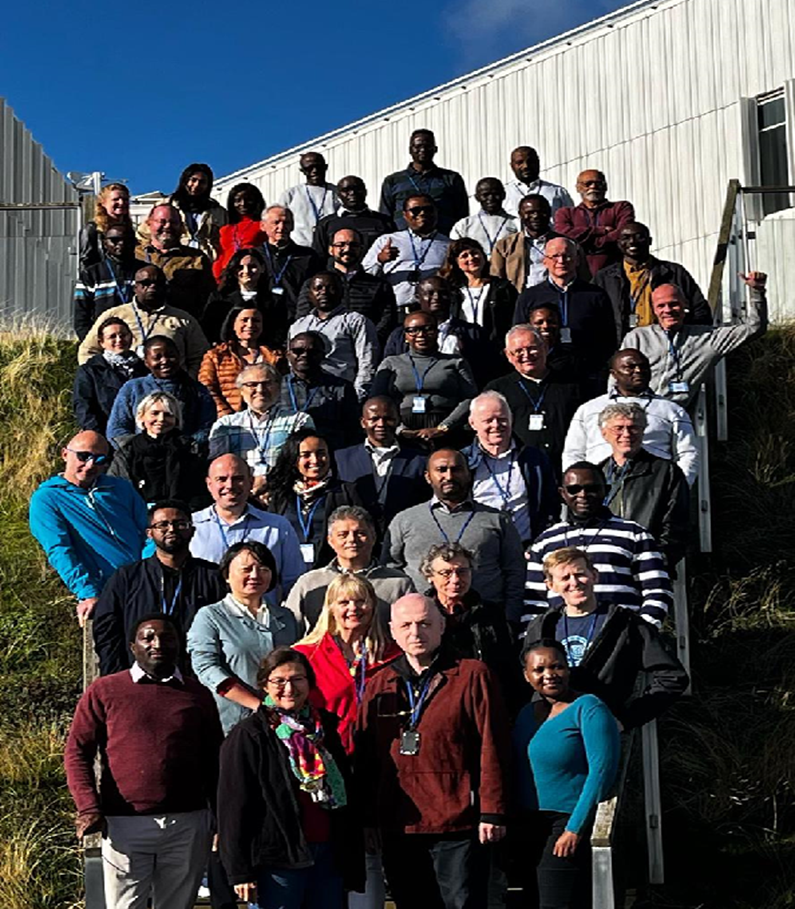
The journey began 25 years ago in 2001 with the guiding motto “working for countries, with countries,” marked by the convening of the first assessment session in June of that year. Now reaching the 150th session, these assessment sessions—which bring together regulators from both WHO Listed Authorities (WLAs) and developing national regulatory authorities for collaborative work—have contributed to the prequalification of more than 1,060 medicines, including over 30 biotherapeutic products, and 240 active pharmaceutical ingredients (APIs). They have also served as a unique and highly effective platform for building regulatory capacity across a vast network of regulators in LMICs and regions.
Since its establishment in 2001, the WHO Medicines Prequalification Programme has operated under the guiding principle of “working for countries, with countries.” In line with this approach, national regulatory experts from countries receiving prequalified products work closely with colleagues from stringent regulatory authorities and WHO staff to assess the dossiers submitted for prequalification. To ensure that country assessors participate fully and meaningfully, not merely as observers, the Medicines Assessment Session, commonly known as the Copenhagen session, was launched in 2001, with the first session held in June of that year at the UNICEF premises in Copenhagen (Denmark).
From an operational perspective, these sessions were designed to ensure the maximum availability of qualified experts to review submitted dossiers over a week (five working days). While assessments also continue outside session weeks, they do so with more limited capacity. The sessions involve a multidisciplinary group of assessors (quality, bioequivalence, clinical and other related disciplines)
Over the years, these sessions have contributed to the prequalification of more than 1060 medicines (including more than 30 biotherapeutic products) and 240 active pharmaceutical ingredients (APIs)* in various therapeutic areas. The sessions have also enabled the timely preparation of the WHO Public Assessment Reports (WHOPARs) and handling of variations, amendments, requalification, and other post prequalification submissions. As well, the prequalification reports generated at these sessions supported more than 1350 national registrations via the Collaborative Registration Procedure (established in 2012).
Impact on the ground is reflected in stakeholder reports on procurement volumes and public health impact. Global Fund data show that in 2024, 26 million people accessed ARVs, 11 million received TB treatment, and 170 million malaria cases were treated, with 18 million women receiving preventive malaria therapy. UNITAID reported in June 2025, as an interim report of its 2023-2027 Strategy, that scale-up of optimal HIV treatments and malaria prevention averted 86 million infections and 930,000 deaths, generating US$10 billion in savings. Further, according to UNITAID, The Global Fund procured dolutegravir-based HIV regimens at historic low prices of US$37 per person/year, halving costs since 2017.
Equally important, the sessions have served as a unique and highly effective platform for building regulatory capacity. Approximately 67% of our current assessor pool is drawn from national regulatory authorities (NRAs) in low and middle income countries (LMICs). To date, more than 300 LMIC assessors have participated in these sessions, many on multiple occasions, gaining hands on experience alongside experts from stringent regulatory authorities. In addition, nearly 50 LMIC assessors, many from African NRAs selected from the pool of the Copenhagen session assessors, have completed three month rotational placements at WHO headquarters. These opportunities have helped develop a strong network of regulatory leaders who today guide national agencies and contribute to regional and continental initiatives, including the African Medicines Agency.
The concentrated availability of experts during the sessions has also enabled WHO to deliver strengthened regulatory support to manufacturers. This has included providing scientific advice, holding both pre‑ and post‑submission meetings, and engaging with procurers on regulatory and related issues.
The 150th assessment session therefore marks an important milestone. It reflects the Programme’s significant contributions over the past 25 years to the global effort to expand access to quality assured affordable medicines, while also serving as one of the most effective and unique capacity building mechanisms for strengthening national regulatory systems. This work supports our long term objective: that all NRAs achieve a functional regulatory system and collaborate effectively across regions and globally.
As we mark this important milestone, we extend our deepest thanks to all our stakeholders —member states, NRAs, manufacturers, the various WHO clinical departments and programmes and our donors (UNITAID, the Gates Foundation and the Global fund). We also acknowledge the UN family and numerous international and national procurers and funding/enabling agencies whose support since 2001 has been instrumental. These include the Global Fund, UNICEF, GDF, UNITAID, former USAID, UNFPA, UNDP, WHO procurement unit, MSF, ICRC, MPP, CHAI, DNDi and many others who have recognized WHO prequalification through their quality assurance policies and continued to support the programme.
* Currently listing 667 products (including 30 BTPs) and 189 APIs
[1] https://www.theglobalfund.org/en/Results/