
Adding life to years
Text size:
-+=

Taff Ely Frailty Nurse Service – Community Engagement
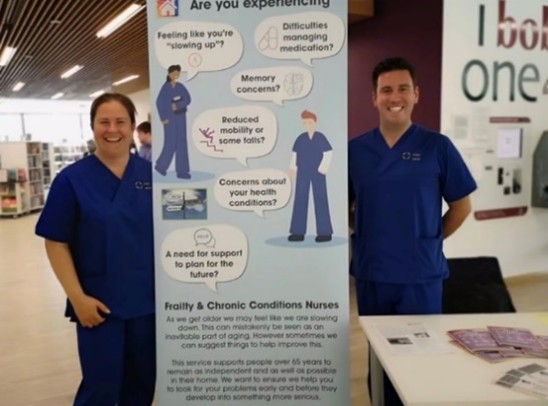

Taff Ely Frailty Nurse Service – Community Engagement

Summary

Frailty is not an inevitable part of ageing. Without intervention, frailty can result in hospitalisation, dependence, and early transitions into care homes. The Frailty Nursing Service offers proactive, community-based support to detect frailty early, improve wellbeing, and reduce avoidable care escalation. By engaging directly with sheltered accommodation residents, the service reaches vulnerable older people who may not access traditional models of care. This outreach work improves access, builds trust, and connects individuals with timely support.

81 residents assessed during visits to sheltered accommodation (April 2024 – March 2025). 30+ onward referrals made to a range of services. Opportunistic screening led to the exploration of patients’ unmet needs, earlier detection of various health conditions, and enhanced access to healthcare services. The project was met with high levels of satisfaction from residents, carers, and housing wardens, reflecting its positive impact on quality of care and support.

Website: https://www.taffelycluster.com/

Key facts

Main target group: Older people in general

Other target group(s): Carers and family members, People experiencing bereavement, low mood, or disengagement from care, Isolated individuals in housing association/supported living

Sector(s): Health

Other sector(s): Primary Care, Community Development

Desired outcome for older people:
Be mobile

Other issues the Age-friendly practice aims to address:
  • Ageism
  • Accessibility
  • Healthy behaviours (e.g. physical activity)
  • Inclusion
  • Participation
  • Other

Contact details

Name: Hannah Watson

Email address: hannah.l.watson@rctcbc.gov.uk


Age-friendly practice in detail (click to expand):

Engaging the wider community

Project lead: Social or health care provider

Others involved in the project:
  • Local authorities

How collaboration worked: The model integrates healthcare and community sectors, supported by strong relationships between Primary Care Networks and housing providers. Frailty Nurses acted as a bridge between systems, coordinating care and navigating support based on individual needs. The Frailty Nurse Service Outreach functioned as a connector across sectors, coordinating with healthcare, housing, social care, and voluntary organisations to deliver joined-up, person-centred care. The collaboration enabled physical observations to be performed, timely onward referrals, streamlined support, and early intervention, reducing reliance on emergency care. Multi-Disciplinary Referrals Made by Frailty Nurses A total of 81 residents were seen at sheltered accommodation. Nurses acted as coordinators, triaging needs and making referrals across services: Joint Care Program (x5), Audiology (x3), Ophthalmology (x3), Memory Clinic (x2), Spirometry (x2), Sensory Service (x2), WISE (x2), Diabetic Eye Screening, Age Connects Morgannwg, Reablement, Aural Care Service, Community Pharmacy, Low Vision Practitioner, Mental Health Practitioner, Lymphoedema Service, Hypertension management, Physiotherapy, Nail Care, Diabetes Specialist, Eye Clinic Liaison Officer, Immunisations, District nurse, Speech & Language Therapy. This illustrates the cross-cutting nature of the service and its capacity to act as a central beacon, diverting patients from inappropriate or delayed pathways. Proactive engagement and screening led to the identification and management of several clinical issues, including tachycardia, shortness of breath, hypertension, postural hypotension, hypotension and an accidental medication overdose. One significant case of hypertension prompted escalation and follow-up, while three patients required medication reduction due to low blood pressure. The approach also addressed multiple unmet needs through GP diversion by carrying out ‘on the spot’ checks. Identifying conditions such as lymphedema, respiratory symptoms, burns, foot and leg ulcers, fever, hearing loss, dizziness, bladder issues, ear infection, and memory concerns. One case required acute escalation when a bedbound patient, unaware that home visits were still available, was later diagnosed in hospital with a spinal fracture. Opportunistic cardiac screening, including the use of AliveCor/Kardia ECG, led to the detection of one suspected case of atrial fibrillation, contributing to stroke prevention efforts.

Older people’s involvement: Older people were involved in the age-friendly practice at multiple or all stages

Details on older people’s involvement: Direct feedback from residents shaped follow-up planning Patient and carer voices informed care plans and helped identify previously unmet needs Positive testimonials led to further clinic scheduling and expansion to other sites

Moving forward

Has the impact of this age-friendly practice been analysed: Yes

Was the impact positive or negative:
Positive

Please share with us what you found in detail:
“I thought Dad was just getting old – turns out there’s much more to it and things can be helped.” “I really didn’t know how to get back on track. Thank you.” “Fantastic idea – would love them to come back every few weeks.”

Feedback:
Initial qualitative feedback gathered – impact analysis ongoing

Expansion plans:
Strengthened proactive whole system approach, the Frailty Nurses continue to carry out community engagement alongside GP and professional referrals and electronic case-finding approaches.

Looking back

Reflections:
Expansion Plans: Strengthened proactive whole system approach, the Frailty Nurses continue to carry out community engagement alongside GP and professional referrals and electronic case-finding approaches. Looking Back Early contact and trust-building are key Addressing needs holistically produces better results Many residents had undetected issues due to poor system navigation or stigma

Challenges:
Identifying disengaged or isolated individuals Managing complex, multi-morbidity with limited community resources DNA (did not attend) rates due to mental health or low motivation – requires flexible, tailored follow-up The project played a key role in overcoming myths and challenging common perceptions of ageing — such as the belief that residents needed to be unwell to access support or that ‘nothing can be done’ to improve health in later life.