

Committed To Becoming More Age-Friendly
Kuching North Malaysia
Dewan Bandaraya Kuching Utara (DBKU) is deeply committed to creating an inclusive, accessible, and liveable city where older adults can remain active, independent, and socially connected. To achieve this, DBKU has progressively implemented community based programmes and strategic activities that support the well-being, civic participation, and social inclusion of older adults across Kuching North.
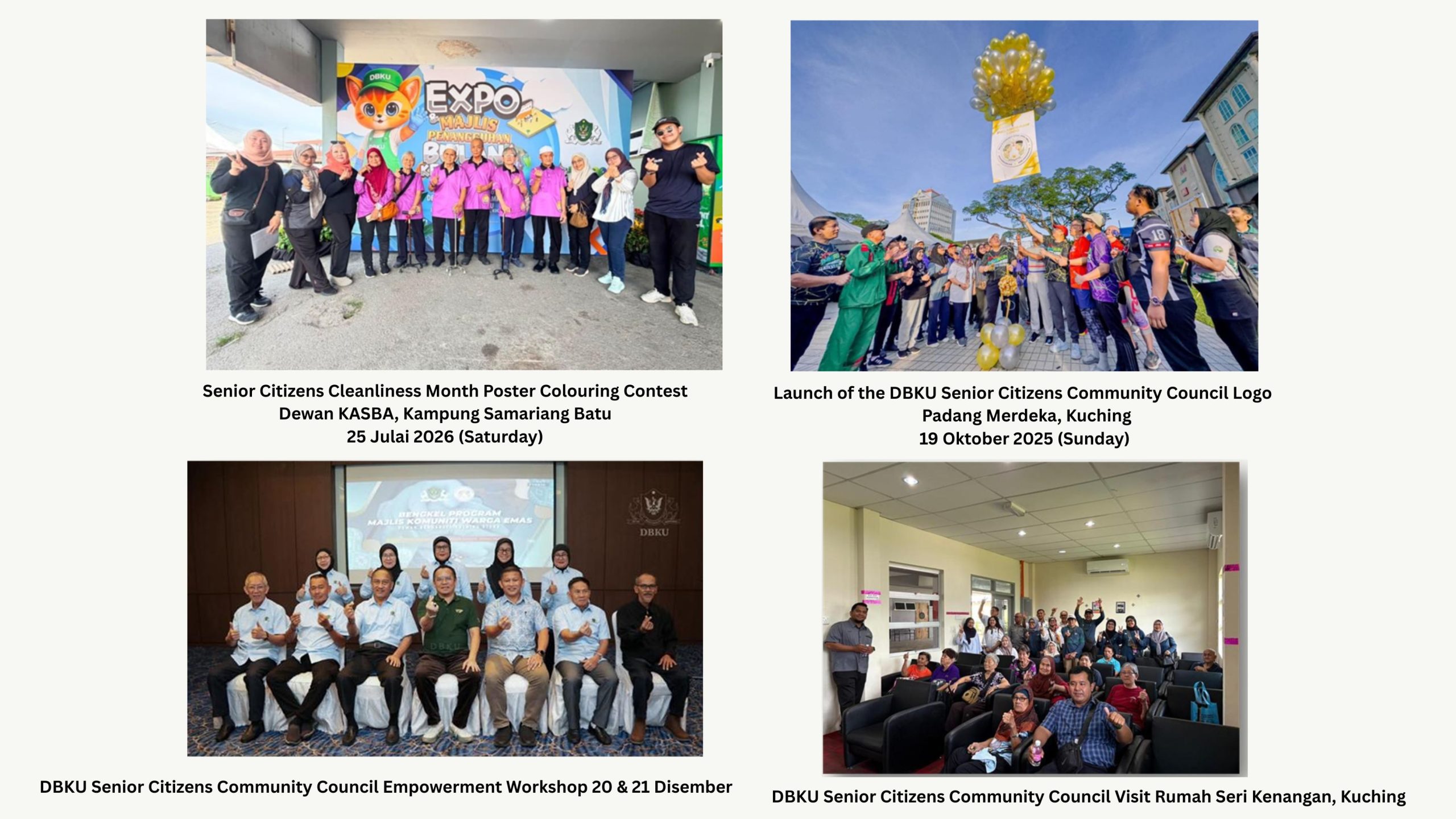
Central to this administrative effort is the DBKU Elderly Council, a formal 15-member advisory body representing residents aged 60 and above for a two-year tenure. Convening on a quarterly basis, the Council advises municipal management on senior welfare policies. Facilitated by a dedicated coordinator, the Council actively promotes civic participation, balanced lifestyles, and structured socio-economic development to enhance the overall well-being of older adults. Aligned with the WHO Age-Friendly Cities framework, these structured operations translate directly into impactful community initiatives, including the official launching of the Council’s logo at Padang Merdeka in October 2025, the Bulan Kebersihan Poster Colouring Contest at Dewan KASBA in July 2026, and the family-centric Bulan Kemerdekaan Poster Colouring Contest at Medan Raya (MASJA) in August 2026.
Furthermore, DBKU enhances Community Support and Health Services through strategic capacity building, notably the DBKU Senior Citizens Community Council Empowerment Workshop at the Riverside Majestic Hotel in December 2025. Corporate social responsibility is consistently sustained through targeted welfare outreach, such as the Council’s official visit to Rumah Seri Kenangan Kuching in December 2026. By synergising this institutional administrative framework with strategic external partnerships—including Pusat Aktiviti Warga Emas (PAWE) and the Kejiranan Mesra (KJM) network—DBKU successfully localises eldercare through gotong-royong and festive events. Moving forward, DBKU plans to make the city more age-friendly by expanding its health and empowerment workshops, increasing the reach of localized intergenerational programmes across the KJM network, and scaling up targeted institutional outreach initiatives through cross-sectoral collaborations involving government agencies, the private sector, and the wider community to ensure an inclusive, supportive, and accessible urban ecosystem for all generations.