
Adding life to years
Text size:
-+=

Information design for preventing falls in older adults
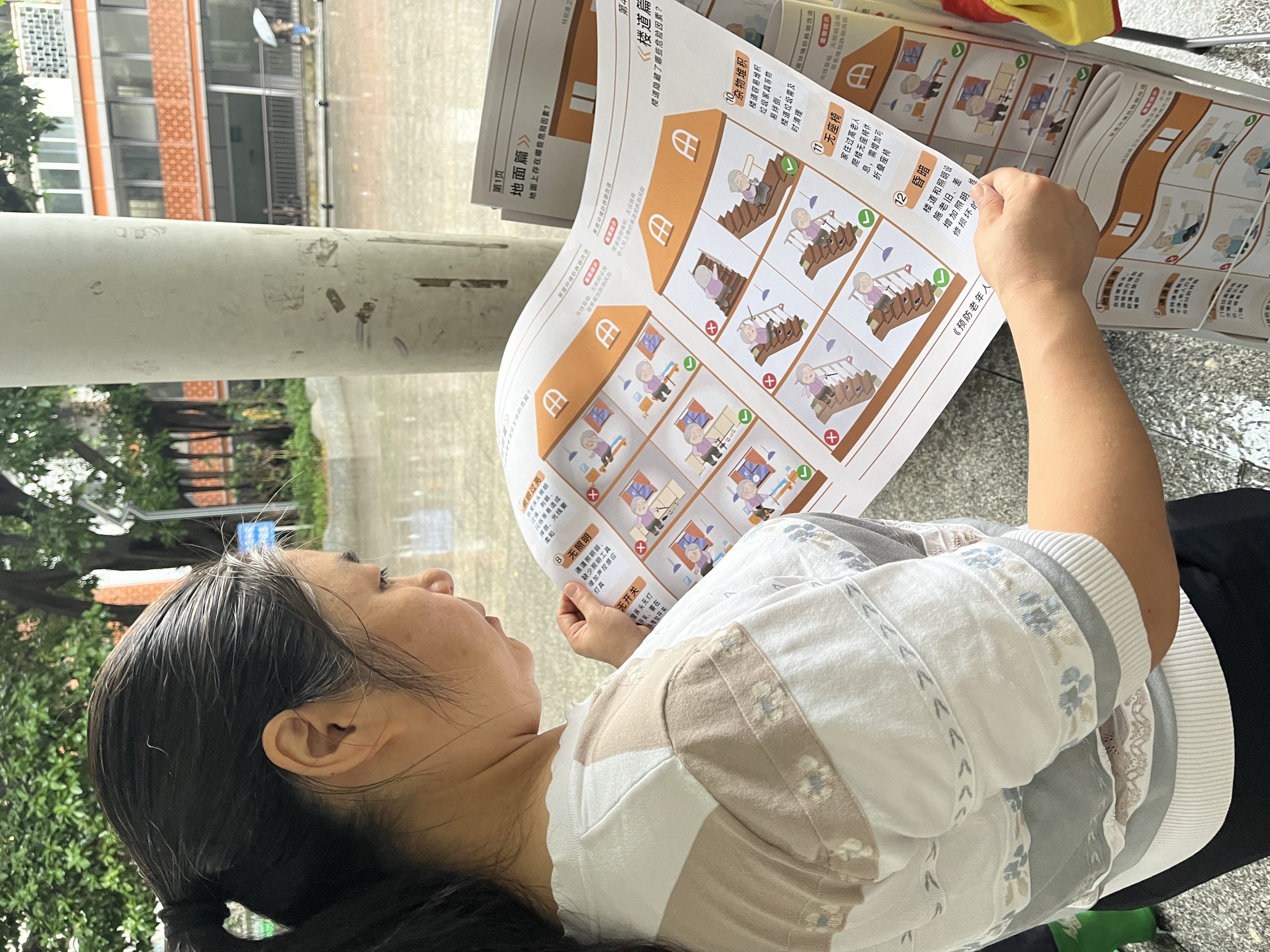

Information design for preventing falls in older adults

Status: Ongoing

Yuexiu District China
Print this page City population: 114600022.25% over 60Practice started in 2024

Summary

Falls in older adults have become a major public health concern worldwide. Fall-related injuries are a leading cause of pain, disability, loss of independence, and premature death. Those consequences may not only affect people’s functional status and quality of life but also bring high financial and medical expenses. In mainland China, falls are the leading cause of injury-related mortality among people aged 65 years and older. However, falls are not an inescapable part of aging as most falls are largely preventable. The current practice which collaborated with community worker aims to raise awareness about the risks of falls and preventive measures, included fall prevention materials and visualization about fall risks information in the community.

Key facts

Main target group: Older people in general

Sector(s): Health, Information and communication

Other sector(s): Fall prevention

Desired outcome for older people:
Learn, grow and make decisions

Other issues the Age-friendly practice aims to address:
  • Ageism

Contact details

Name: Huang, Ren

Email address: huangren@gdut.edu.cn

Preferred language(s): English

Age-friendly practice in detail (click to expand):

Engaging the wider community

Project lead: Research institution

How collaboration worked: Huale Street Community (Yuexiu District, Guangzhou) supported our research on the impact of falls on older persons within the community which helped us to determine the user needs and design opportunity. They also provided the public area and volunteers to support our distribution of fall prevention materials to the older persons in the community.

Older people’s involvement: Older people were consulted during the planning process

Details on older people’s involvement: The older adults in the community help us to understand their opinions about the fall prevention intervention. They also participated to conduct the usability test of our information design.

Moving forward

Has the impact of this age-friendly practice been analysed: No

Do you plan to evaluate your age-friendly practice? Yes

Feedback:
From the user research, we found the older people in the community have different attitudes about fall prevention interventions. For older persons who have not experienced a fall, there is a lack of motivation to learn more about fall prevention efforts as they do not believe that the information is relevant to them. For older persons who have the experience of falling, they have more fear and a vigilant attitude against falling. Those older people actively participated in our fall prevention activities and were interested to learn fall prevention knowledge and skills.

Expansion plans:
We will expand our practice in the further. We plan to cooperate with surrounding communities, clinics, and hospitals to conduct fall prevention activities to improve older persons awareness and knowledge about fall prevention.

Looking back

Reflections:
We want to explore whether the fall rate in the community was decreased as a result of our fall prevention activities. We may collect more precise fall data about the community in the future. If we could do the practice again, we will pay more attention on the pre-training guidance process of the fall emergency manual to facilitate older persons’ understanding and mastery of the skills in the case of a fall.

Challenges:
During the preliminary survey research many older people did not want to participate in the research due to misunderstandings about falling. Our members patiently explained the risks and the consequences of falls which then inspired older persons to participate in the project.