
Adding life to years
Text size:
-+=

Healthy Aging Workshop

Healthy Aging Workshop

Status: Ongoing

Çavdır Municipality Turkey
Print this page City population: 3830Practice started in 2025

Summary

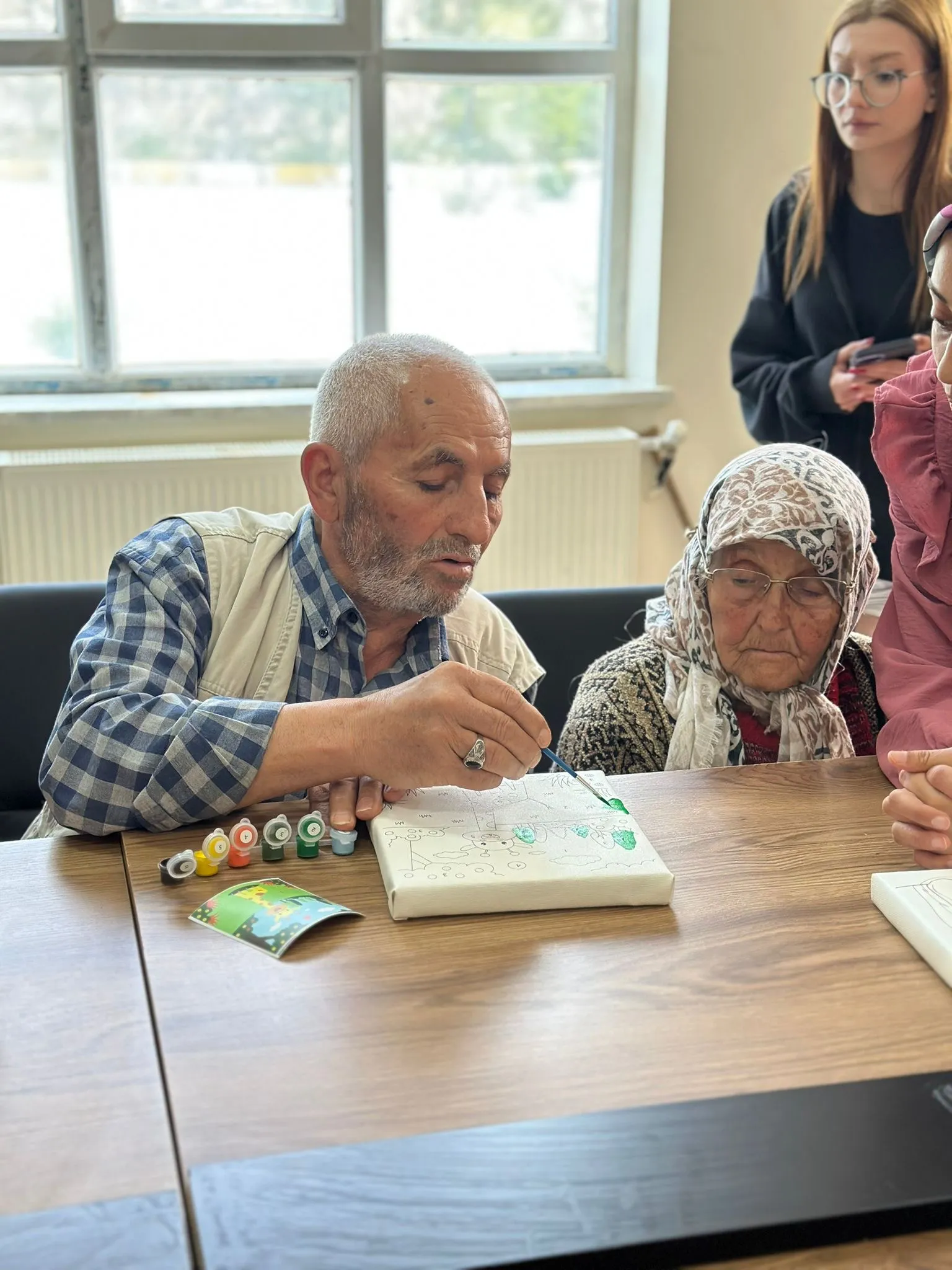
The “Healthy Aging Workshop” implemented by Çavdır Vocational School is an innovative age-friendly practice designed to enhance the quality of life of older adults living in rural areas. The main goal of the project is to support active aging, reduce loneliness, and strengthen the physical, psychological, and social well-being of older residents. The program was developed in response to Burdur’s rapidly aging population, where over one-third of older adults live alone and face challenges such as social isolation, limited access to health and care services, and digital exclusion.

The design of the practice combines social participation activities, health and wellness seminars, digital literacy workshops, and skill-building exercises for daily living. By creating a safe and inclusive community space, the workshop allows older people to build social ties, share experiences, and engage in intergenerational activities with university students.

So far, the practice has helped reduce feelings of loneliness among participants and empowered them with new skills, particularly in digital literacy. Lessons learned include the importance of building trust with older participants, tailoring activities to their abilities, and ensuring long-term sustainability through institutionalization. The project demonstrates how rural municipalities can adopt a rights-based, community-centered model of older adult care that goes beyond traditional institutional services.

Website: https://cavdirmyo.mehmetakif.edu.tr/tr/content/22917/1/meslek-yuksekokulumuzda-saglikli-yas-alma-atolyesi-kuruldu

Key facts

Main target group: Older people in general

Other target group(s): University students (Elderly Care and Social Services programs) who gain practical training and experience. Family members of older adults, who benefit from reduced caregiving burden and improved well-being of their relatives. Local community and volunteers, who participate in intergenerational and social activities.

Sector(s): Education

Desired outcome for older people:
Learn, grow and make decisions

Other issues the Age-friendly practice aims to address:
  • Ageism
  • Ageing in place
  • Healthy behaviours (e.g. physical activity)
  • Participation
  • Technologies

Contact details

Name: Kutlu, Özge

Email address: okutlu@mehmetakif.edu.tr

Preferred language(s): English

Age-friendly practice in detail (click to expand):

Engaging the wider community

Project lead: Local authorities

Others involved in the project:
  • Volunteers
  • Research institution

How collaboration worked: Collaboration was at the heart of the “Healthy Aging Workshop,” both in planning and in implementation. The project was initiated and coordinated by Çavdır Municipality, which provided 75% of the budget from municipal resources and ensured the necessary infrastructure. An additional 25% of funding was secured through other public institutions, making the project financially stable without reliance on short-term sponsorships or external grants. This financial model demonstrated that even small municipalities can prioritize social investments when there is strong political will. From a project management perspective, the municipality took responsibility for overall coordination, monitoring, and budget control, while Burdur Mehmet Akif Ersoy University contributed academic expertise and human resources. Faculty members provided consultancy to ensure that the activities were evidence-based and tailored to the needs of older adults. Meanwhile, students from the Elderly Care and Social Services programs played an active role in daily workshops, assisting older participants, facilitating group activities, and bringing fresh perspectives to the design of sessions. This partnership not only improved the project’s quality but also created a living laboratory where students could gain hands-on experience and older people could benefit from intergenerational contact. Local stakeholders such as muhtars, NGOs, and community organizations were also engaged. They helped identify isolated older adults, encouraged them to join the program, and acted as mediators between the project team and the community. This grassroots involvement increased participation rates and built trust among older residents who were initially hesitant.

Older people’s involvement: Older people were involved in the age-friendly practice at multiple or all stages

Details on older people’s involvement: Older adults in the “Healthy Aging Workshop” were not passive recipients but active contributors to the process. They shaped the content of activities by sharing their needs and preferences, participated in digital literacy and healthy living sessions, and enriched workshops by transmitting their life experiences, cultural knowledge, and traditional practices to younger generations. Their involvement ensured that the program remained relevant, empowering, and respectful of older people’s voices.

Moving forward

Has the impact of this age-friendly practice been analysed: No

Do you plan to evaluate your age-friendly practice? Yes

Feedback:
Yes, the “Healthy Aging Workshop” has received both positive and constructive feedback from older participants, which has been valuable in shaping the program. On the positive side, many older adults expressed that the workshop provided them with a safe and supportive environment where they could socialize, make new friends, and feel less isolated. They particularly appreciated the intergenerational interaction with university students, which gave them a sense of being valued and respected by younger generations. Several participants noted that digital literacy training was life-changing, as it enabled them to communicate with distant family members through smartphones and social media, reducing their sense of disconnection. Others highlighted that the health and wellness seminars improved their awareness of preventive care and motivated them to adopt healthier daily routines. At the same time, some constructive feedback was also received. A number of participants found the digital training sessions too fast-paced and suggested a more step-by-step approach with individualized attention. Others initially felt hesitant to join group activities due to shyness or lack of confidence, emphasizing the need for more introductory and confidence-building exercises. In addition, participants from remote villages mentioned transportation difficulties, which limited their regular attendance. These feedback points have been taken seriously by the project team. Adjustments were made to slow down digital literacy training, more personalized support was introduced, and plans for mobile outreach services were incorporated into the future expansion strategy. Overall, the feedback process has reinforced the importance of listening to older people’s voices and continuously adapting the practice to their evolving needs.

Expansion plans:
Yes, the municipality plans to expand and diversify the “Healthy Aging Workshop” in the coming years. The most immediate goal is to extend services to remote rural neighborhoods through the creation of mobile outreach units. This will allow older adults who face transportation difficulties to benefit from health monitoring, social activities, and digital literacy training in their own communities. By bringing services closer to participants, the project will ensure more equitable access across the district. Another important step in expansion is the professionalization of services. While the current phase has relied largely on student volunteers and academic consultants, the municipality is preparing to employ specialized staff such as gerontologists, nurses, social workers, and older adult care technicians. This will both increase the quality of services and ensure sustainability by establishing a permanent professional team. The expansion also includes plans to broaden intergenerational programming, building on the positive experiences with university students. More structured activities, such as cultural events, storytelling sessions, and joint community projects, will be introduced to deepen the connections between younger and older generations. In addition, collaboration with NGOs and other municipalities will be pursued to replicate the model in neighboring regions.

Looking back

Reflections:
Looking back, one of the most important reflections is that building trust with older adults takes more time than initially expected. At the beginning of the project, some participants were hesitant to join group activities because they were unfamiliar with structured programs or lacked confidence in their abilities, especially in digital literacy. If we could start again, we would organize introductory sessions with families, local leaders, and community health workers before the workshops began, to help ease fears and encourage participation from the very beginning.

Challenges:
The project encountered several challenges. Financial limitations were one, but the municipality addressed this by prioritizing budget allocations and partnering with public institutions instead of relying solely on external sponsors. Another challenge was initial reluctance among older adults to participate, especially those experiencing isolation. To address this, muhtars and community leaders personally encouraged participation and even accompanied older people to the first sessions. Finally, transportation barriers limited access for some rural participants; this highlighted the need for mobile outreach services, which are now planned for future expansion.