
Generation Games in the City of Sandnes
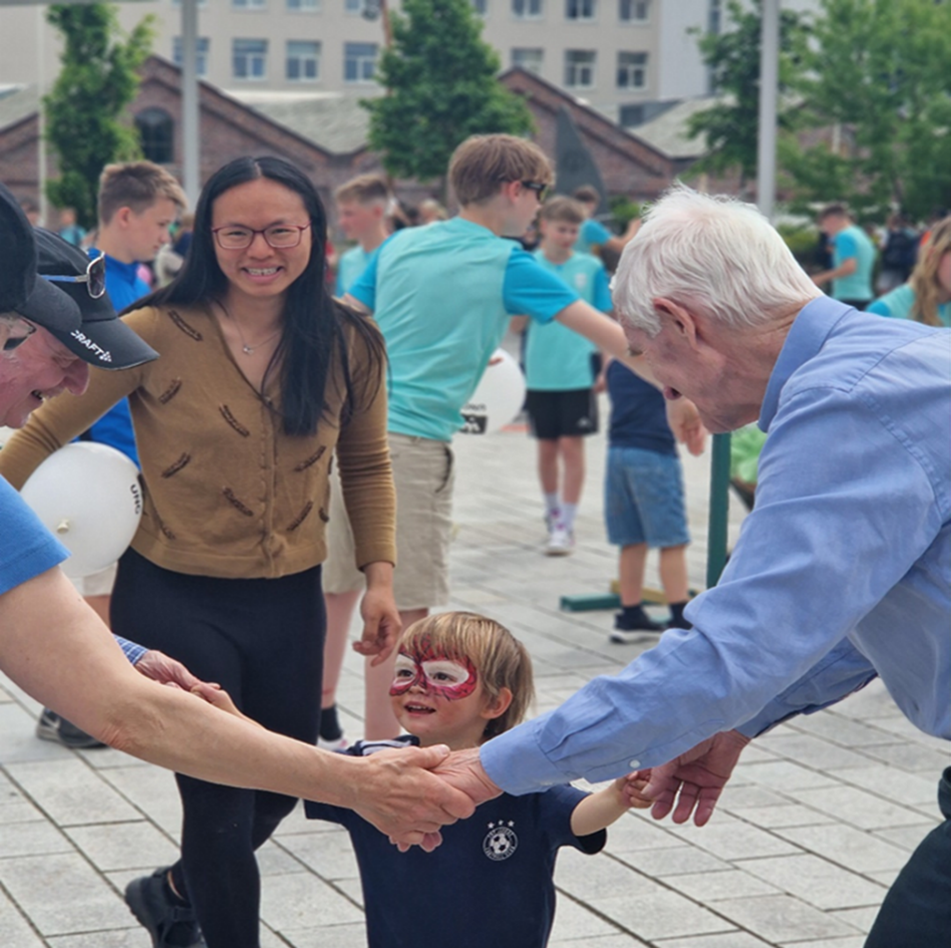

The city of Sandnes has 83 700 inhabitants and has hosted the Generation Games for the last two years and is planning its third edition in 2025. Number of participants is high and growing every year. The Generation Games is a free event, with fun and games across generations. The focus is on creating a meeting place and activities for all generations, involving the city administration, the voluntary sector and organisations and businesses.
The idea to arrange Generation Games began when we started working with ideas concerning how to become an age- friendly community. Our goal was to make sure that older people have the same possibilities to participate as young people. We want to become a more inclusive and accessible society for all generations.
First, we assembled a small group of employees and started working with potential partners. It was important to ensure a broad involvement across different sectors within the city administration. Furthermore, there was extensive outreach to potential partners externally. Pupils, voluntary teams, organisations and local businesses became partners from the start.
We challenged pupils from both high school and secondary school to come up with suggestions for different activities. High school students have even integrated this into their curriculum. Local businesses are contributing both with human resources and financially. It has been the focus from the start that activities are to be accessible for all generations, but also for people with disabilities.
Generation Games in the city of Sandnes has become an important meeting place and tradition, adding value for all the pupils in terms of growth and sense of responsibility. It is a tool for combatting ageism and making Sandnes an attractive and inclusive city to live in.
Main target group: Both younger and older people (i.e. intergenerational)
Other target group(s): Volunters, buisnesses, pupils
Sector(s): Education, Health, Information and communication, Labor, Social protection, Urban development
Desired outcome for older people:
Build and maintain relationships
Name: Øverland, Elisabeth
Email address: elisabeth.overland@sandnes.kommune.no
Preferred language(s): Norwegian or English