Adding life to years
Text size:
-+=

Summary

The age friendly practice “digital activities for home care recipients” was developed by Kristianstad municipality to reduce loneliness and increase social participation among older adults receiving home care services, who are unable to attend physical meeting places due to health limitations (physical or mental), long distance or other reasons.

Kristianstad municipality has a well-established preventative unit with several physical meeting places offering social activities. However, some groups, particularly home care recipients, have been difficult to reach. This project aimed to test digital social activities as a complement to physical meeting places, enabling participants to meet others from their own homes.

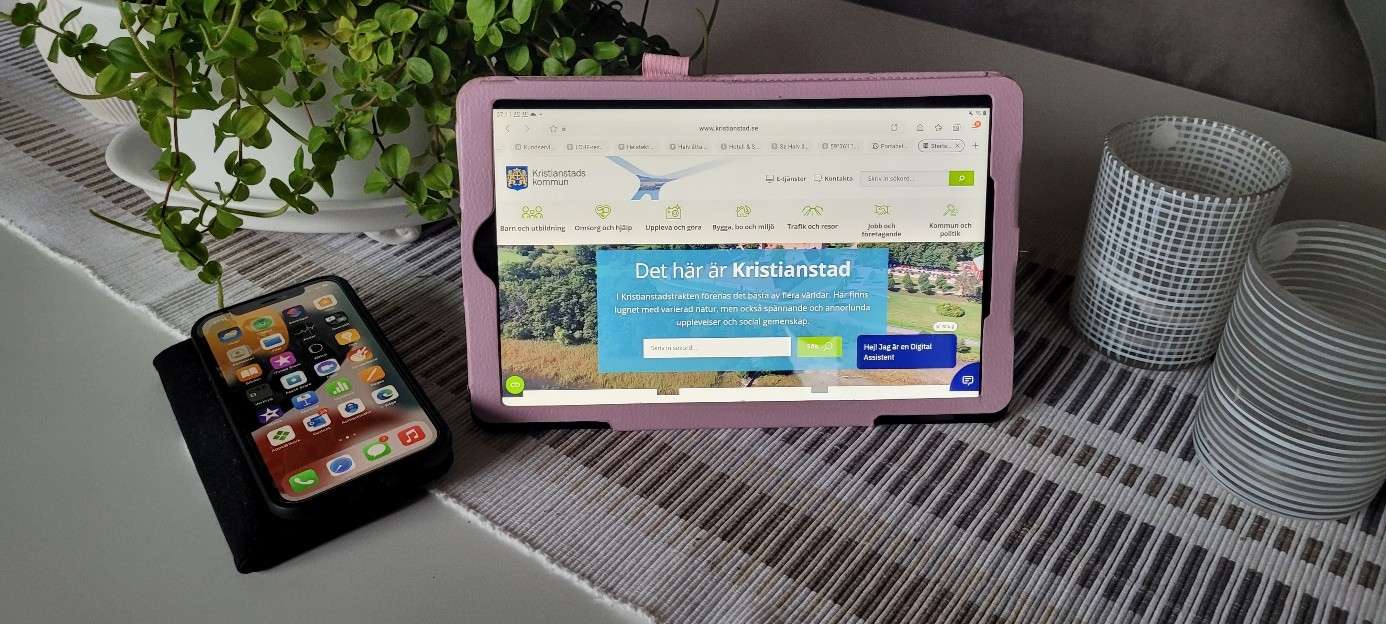
The project was implemented as a pilot in the autumn of 2025. Through collaboration with home care staff, participants were identified. Participants’ interests were also identified and used to design small, themed digital group activities. Examples of themes were news, culture, hobbies and memories. Participants were provided with a tablet and internet connection, as well as personal support from the public library staff during the initial setup. Digital activities were conducted in small recurring groups using video meetings, allowing participants to gradually get to know each other and build a sense of security.

The project involved cooperation between the preventative unit, home care services, the IT unit and the public library.

The project demonstrated that digital meeting places can be a feasible and appreciated way to reduce social isolation and promote wellbeing among older adults. Key lessons learned include the importance of personal outreach, simple technology, small groups and clearly defined roles in cross sector collaboration

Website: https://www.kristianstad.se/upplevaochgora/motesplatser/motesplatserforettgottliv.5433.html

Key facts

Main target group: Vulnerable older people (e.g. at risk or victims of abuse, living alone, poor etc.)

Other target group(s): Older people with chronic health conditions or disability. Older adults with limited digital experience.

Sector(s): Health, Information and communication, Other

Other sector(s): Public services. Digital inclusion and lifelong learning. Social community. Social care.The project also involved collaboration with civil society and local associations through activity content.

Desired outcome for older people:
Build and maintain relationships

Other issues the Age-friendly practice aims to address:
  • Healthy behaviours (e.g. physical activity)
  • Inequities
  • Inclusion
  • Participation
  • Other

Other Issues: In addition to reducing loneliness and social isolation the project aims to address: - Digital exclusion among older adults. - Inequality in access to social and preventative services The project also promotes independence and continued participation in community life.

Contact details

Name: Martin Broms

Email address: martin.broms@kristianstad.se


Age-friendly practice in detail (click to expand):

Engaging the wider community

Project lead: Local authorities

Others involved in the project:
  • Civil Society Organisation
  • Social or health care provider

How collaboration worked: The project was led and funded by Kristianstad municipality who received a government grant of 30 000 kr. The money was spent on renting tablets from the IT unit as well as for booking lectures for digital activity content. The unit leading the initiative was the preventative unit. Collaboration took place between the preventative unit, home care services, the public library and the IT unit. Clear communications, clear roles and shared responsibility were key elements in managing the project and ensuring smooth implementation. As well as a client-centered approach through all collaborators.

Older people’s involvement: Older people were involved in the age-friendly practice at multiple or all stages

Details on older people’s involvement: Older people played an active role by sharing their interests and preferences, which directly shaped the content of the digital activities. Their feedback during and after the activities was central to adjusting the format and improving the practice.

Moving forward

Has the impact of this age-friendly practice been analysed: Yes

Was the impact positive or negative:
Positive

Please share with us what you found in detail:
Yes. The impact was evaluated through participant feedback using both a short survey and an open dialog both in group and one on one with the project leader. The evaluation focused on participants experience, perceived loneliness and confidence in digital tools. All participants indicated that their perceived loneliness decreased during the digital activities compared to before. In addition, participants also indicated that they had the opportunity to create new valuable acquaintances, as well as possibility to express and share their own opinions and interests. Participants also answered that their confidence in digital tools had increased after the digital activities, promoting lifelong learning. The project has also been evaluated through dialog with all the collaborators. Overall the evaluation indicated that collaborators benefited from digital activities partly through the possibility of reaching a new client base, for the public library, and having the opportunity to provide higher quality and more versatile care, for the home care units.

Expansion plans:
Yes. Based on the positive outcome of the pilot project, there is an intention to further develop and implement digital activities into regular preventative services. Future expansions may include collaboration with more home care units as well as other sectors where the target audience can be found, offering a wider range of themed activities, and establishing a more permanent structure for collaboration on digital support.

Looking back

Reflections:
The experience highlighted the importance of early planning and simple, user-friendly technology. An issue during the implementation was spontaneous technical difficulties related to the digital meetings for the home care recipients. Though they had gotten support from the public library on how to use the tablet during the initial setup, as well as a written manual, technical problems could occur. This was solved using phone support and communication between the activity leader and the home care recipient. Again, highlighting the importance of the flexible possibilities of the pilot project. An additional problem with the project was finding participants who wanted to take part. For older adults not familiar with digital tools, digital activities could seem foreign and difficult. For future initiatives more focus should be placed on how the information about digital activities is distributed and communication with the home care recipient in order to reduce the mental barrier to participation, ensuring that the participant gets all the necessary help. For example, this could be done by allowing the home care staff more time to sit down with the recipient and discuss what digital activities are and what the process looks like, to reduce uncertainties. If the project was repeated, greater emphasis would also be placed on long-term sustainability and transition from pilot project to regular practice.

Challenges:
One key challenge was varying levels of digital confidence among participants. This was addressed through individualized support, where some participants needed more support visits from the public library staff than others. It was also addressed using standardized technical solutions, in this case an easily managed QR code that led the participant straight to the open digital meeting, skipping unnecessary login steps. Another challenge was coordinating different responsibilities between different organizations, which was managed through continuous dialogue, clear communication and flexible problem-solving throughout the project period.