
Center of Excellence for Developing Age-Friendly Communities
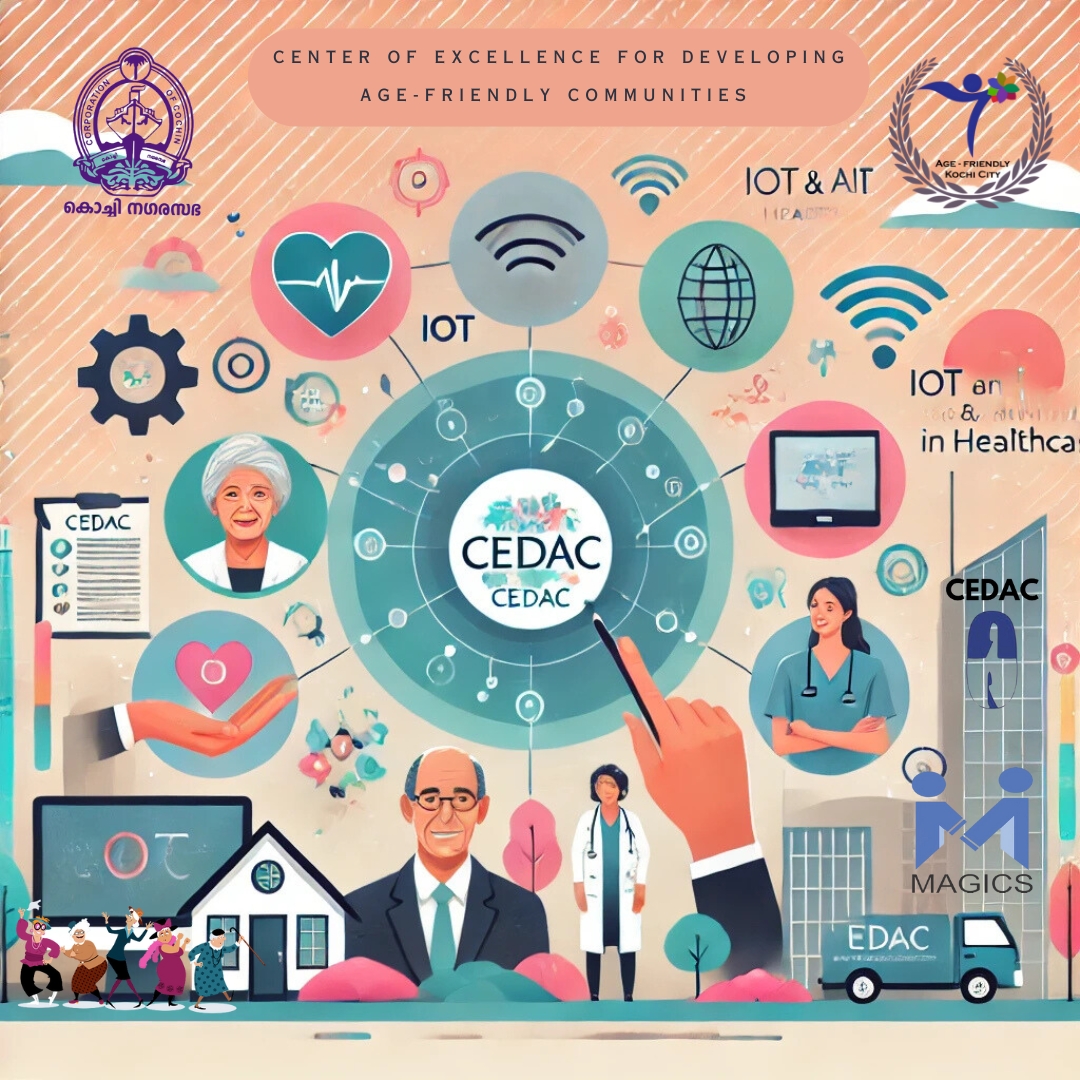

The Center of Excellence for Developing Age-friendly Communities (CEDAC), a wing of MAGICS NGO in Kochi, India, has been at the forefront of creating a more inclusive and supportive environment for older persons. Their work embodies the spirit of World Elder Abuse Awareness Day by promoting well-being and fostering independence.
There are many organisations and institutions and individuals who are working for the care of older persons and providing services that may benefit older persons. But these activities are happening in isolation and hence there was a felt need for a common ground or a platform where various stakeholders can collaborate and contribute. Recognizing that isolated efforts weren’t enough, CEDAC was established to bridge the gap. They function as a collaborative platform, bringing together various stakeholders to design and implement age-friendly initiatives.
CEDAC collaborate with colleges, academic institutions, NGOs and key individuals. Consultation with civil society ensures that programs address the actual needs of Kochi’s older population. Such a platform for collaboration resulted in initiatives like:
Senior Taxi Service that provides safe and accessible transportation options; University of the Third Age (U3A) that provides continued learning for older persons; Age-Friendly Colleges to create inclusive spaces for intergenerational interaction and learning, for example are programs to demonstrate a positive impact, even if specific data isn’t readily available. Imagine an older person using the Senior Taxi service to reach a doctor’s appointment or attend a U3A lecture. This newfound independence and social connection contribute significantly to their well-being. CEDAC’s success highlights the power of collaboration, ongoing evaluation, and evidence-based planning.
Website: https://www.agefriendlykochi.com/cedac
Main target group: Older people in general
Sector(s): Education, Health, Information and communication, Labor, Social protection, Transportation
Desired outcome for older people:
Learn, grow and make decisions