
Careful movement – a practice designed to enhance the motor rehabilitation
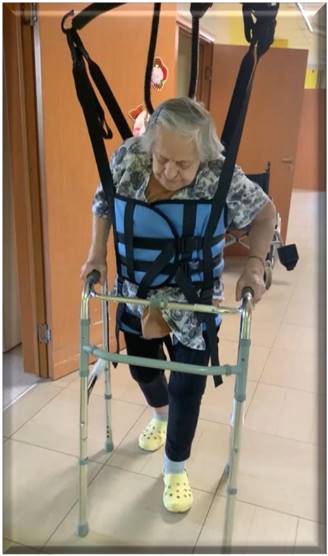

The goal is to develop a personal approach to the motor rehabilitation of older people receiving social services.
Objectives are the following:
• possibly full restoration of physical activity and combating the effects of physical inactivity;
• recovery of lost body skills or functions after severe illnesses or injuries;
• reducing the risk of falling and secondary injury;
• reducing the workload for medical and support staff.
Many of more than 1.4 million of older people in St-Petersburg live with physical inability, and analysis of individual rehabilitation programs reveals that almost all people with disabilities require medical rehabilitation, with more than 90% also needing social rehabilitation. Household adaptation and accessible environment creation are particularly in demand, individuals with disorders of the musculoskeletal system need assistance. Therefore, it is especially important to introduce practices that help improve movement, coordination, walking, and other physical functions. This allows people with disabilities to be more active, independent and involved in the society.
The practice of Careful Movement is aimed at the rehabilitation of people with disabilities residing in inpatient social care facility using a ceiling rail system. Participation in the Careful Movement project has been shown to enhance the confidence and independence of people who have significant limitations in self-care and movement.
The St-Petersburg Social Care Institution «Boarding home for older and disabled people №1» designed the project primarily to help people receiving social services at the institution. However, state powers providing medical and social care for the older and disabled people highly evaluated this practice, so it might be implemented in other social care and medical institutions.
Website: https://smarteka.com/contest/practice/bereznoe-dvizenie-0
Main target group: Both younger and older people (i.e. intergenerational)
Other target group(s): Older and disabled people with disorders of the musculoskeletal system and in need of medical rehabilitation
Sector(s): Health, Social protection
Desired outcome for older people:
Meet their basic needs
Name: Provornaya, Yulia
Email address: prus@kzdrav.gov.spb.ru
Preferred language(s): English, Russian