
Adding life to years
Text size:
-+=

+AGIL-URBA Bcn: Amabilidad Urbana para las personas mayores
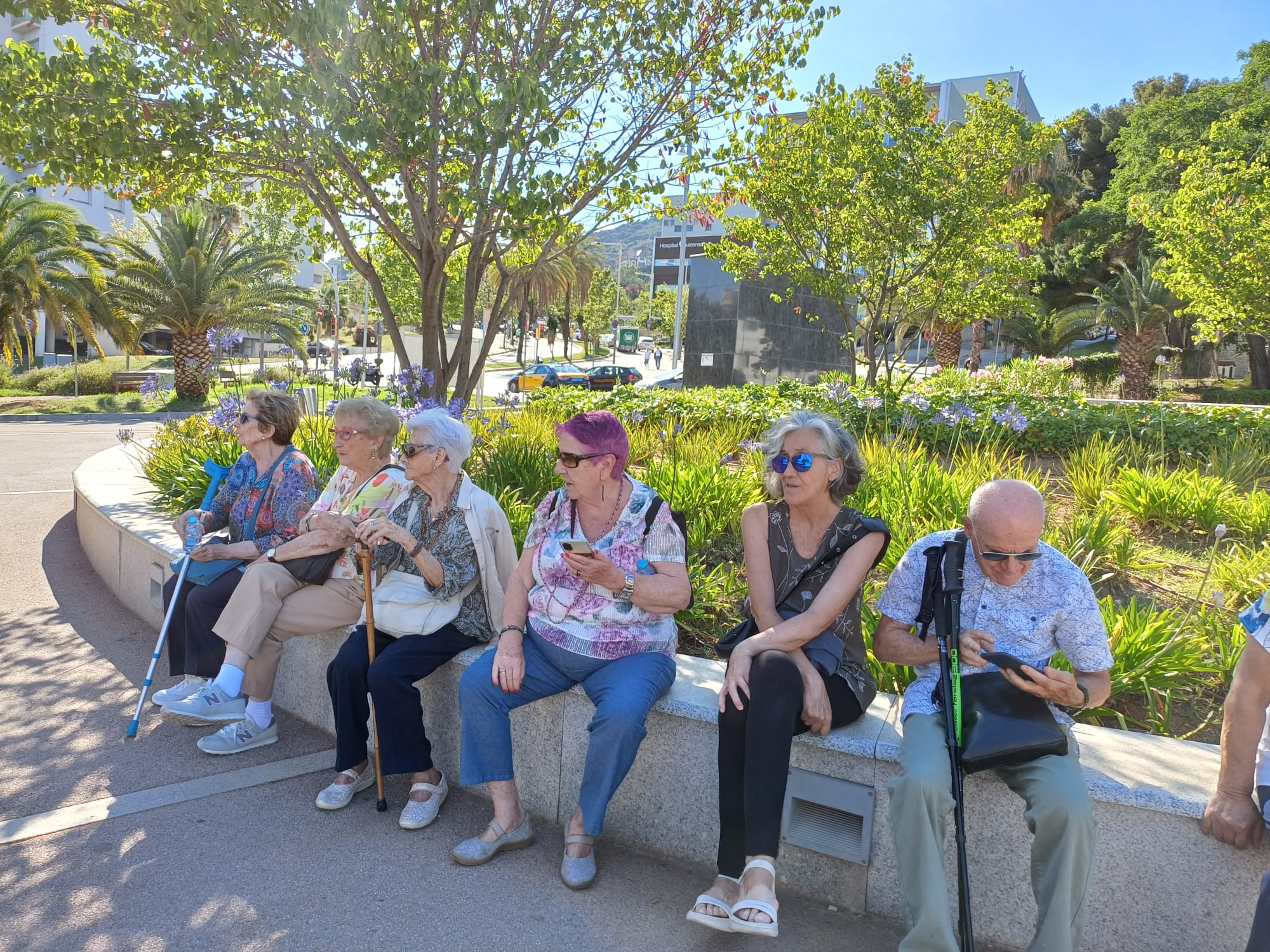

+AGIL-URBA Bcn: Amabilidad Urbana para las personas mayores

Summary

+AGIL-URBA is a multidisciplinary research project involving 3 leading institutions, VHIR – Vall d’Hebron Research Institute, the Parc Sanitari Pere Virgili, and IMIM – Hospital del Mar Research Institute, to study the walkability of Barcelona’s neighborhoods for older adults.

Using a participatory research study design, we developed 3 semi-structured interviews (one for each of the participant centres), based on the results of a bibliographic review and 3 focus groups with relevant stakeholders.

Fifty-seven urban environment indicators were identified and 12 were selected based on feasibility criteria for use in semi-structured interviews. Our target population was people pre-frail or frail aged ≥65 years living independently in the community, in 4 small areas of Barcelona (Basic Healthcare Areas – BHA). People participating in a primary care program (+AGIL) addressing frailty in 3 centres of Barcelona were recruited (n= 133).

We collected information (July 2023 – July 2024) on socio-demographics; frailty (Gérontopôle frailty screening tool); lifestyle (Brief Physical Activity Assessment Tool); usual walking routes (marked on BHA maps); and the evaluation of the 12 urban indicators (Likert scale 1-10) in terms of relevance for their walking routes. Usual walking routes were represented in descriptive-spatial maps with QGIS software.

The information was validated with photographic fieldwork and World Cafe methodology, with 5 participants from each primary care centre (n=15). Environmental information (e.g., ground surface temperature, etc.) will also be incorporated to develop a walkability composite index for these small areas. Research results will be used to formulate urban planning and public health policy recommendations.

+AGIL-URBA Bcn

Key facts

Main target group: Older people in general

Other target group(s): Pre-frail and frail older adults

Sector(s): Health

Desired outcome for older people:
Be mobile

Other issues the Age-friendly practice aims to address:
  • Accessibility
  • Ageing in place
  • Healthy behaviours (e.g. physical activity)
  • Participation

Contact details

Name: Perez Bazan, Laura Mónica

Email address: lperez@perevirgili.cat

Preferred language(s): Spanish or English

Age-friendly practice in detail (click to expand):

Engaging the wider community

Project lead: Research institution

Others involved in the project:
  • Local authorities
  • Social or health care provider
  • Private sector

Older people’s involvement: Older people were involved in the age-friendly practice at multiple or all stages

Details on older people’s involvement: They had the opportunity to give their opinion about a selection of urban environment indicators through a focus group, validate the results obtained through the interviews, and prioritize the neighborhood problems identified, formulating recommendations to improve their neighborhoods for aging-in-place.

Moving forward

Has the impact of this age-friendly practice been analysed: No

Do you plan to evaluate your age-friendly practice? No

Feedback:
Feedback from participants after the individual interviews and the World Cafe session was very positive. They were happy to participate by giving their opinion on their neighborhoods through the assessed urban indicators, as well as prioritizing the identified neighborhood problems.

Expansion plans:
Yes, for example, by conducting future research using wearable devices as objective measures of the mobility in the city and the physical activity of older adults.

Looking back

Reflections:
If we could replicate our friendly practice with older adults, we would develop an in-depth qualitative study to collect their experiences (not only) in their neighbourhoods of residence: for example, what features of the neighborhood represent for you a barrier or a motivator for walking?

Challenges:
A major challenge was the recruitment of participants. To avoid drop-outs, we developed a procedure in which the intervention implementers deposited an Excel list with the identification data and telephone numbers of eligible patients in a secure folder at the research institute. The interviewer was responsible for telephoning patients and scheduling the visit and sent a reminder via mobile phone with the time/place of the visit and the telephone number of the interviewer. Before the interview date, the interviewer phoned patients to confirm whether or not they were able to attend the appointment.