

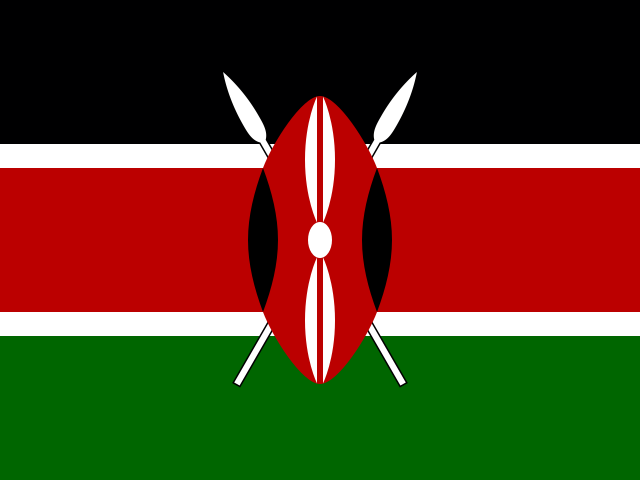
Constitution
The Constitution of Kenya is a supreme law of the Republic of Kenya. It was adopted in 2010 and replaced the previous Constitution of 1963. The Constitution consists of 264 articles that are arranged into 18 chapters covering such issues as the bill of rights, organization of the state, separation of powers, electoral framework, etc.
These Guidelines outline standardized protocols for voluntary testing and counselling to enhance access to HIV services, ensure informed consent, and promote client confidentiality and support.
The Kenya National Guidelines for Quality Obstetrics and Perinatal Care provide a comprehensive framework to ensure safe, effective, and respectful maternity care, aiming to improve health outcomes for mothers and newborns throughout the perinatal period.
The Kenya National Guidelines for the Implementation of the Basic Care Package offer a structured approach to delivering essential health services to vulnerable populations, focusing on comprehensive care, prevention, and treatment to improve overall health outcomes.
The Kenya National Infection Prevention and Control Guidelines for Health Services (2010) provide essential protocols and best practices to prevent and control infections in healthcare settings, ensuring the safety of patients, staff, and the community.
This Guidance Framework outlines strategies and standards to ensure high-quality, client-centered HIV testing and counselling services, promoting accuracy, safety, and confidentiality in the process.

The law creates the legal framework for civil identification and the issue of national identity cards. The purpose is to collect, process and store the personal data of each citizen in order to establish their civil identity. The law applies to acts of civil identification and the issuing of identity cards to Angolan citizens from the age of at least six.
These Guidelines outline a framework for transferring HIV/AIDS service delivery responsibilities from central to local levels, promoting community involvement and improving access to care.
The Tobacco Control Act
This Act controls the production, manufacture, sale, labelling, advertising, promotion and sponsorship of tobacco products, provides for the Tobacco Control Board, regulates smoking in specified areas and connected purposes.
This Act provides for the training, registration and licensing of nutritionists and dieticians; provides for the regulation of the standards, and practice of the profession; ensures their effective participation in matters relating to nutrition and dietetics, and for connected purposes.
These guidelines provide the required standards on the establishment, registration, management and supervision of early childhood development (ECD) services. These are to ensure the effective implementation of ECD programmes.
These guidelines provide a comprehensive framework aimed at addressing the dual burden of tuberculosis (TB) and HIV in the country. The guidelines emphasize the importance of integrated service delivery to improve health outcomes for individuals affected by both diseases.
This Act provides measures for the prevention, management and control of HIV and AIDS, provides for the protection and promotion of public health and the appropriate treatment, counselling, support and care of persons infected or at risk of HIV and AIDS infection, and connected purposes.
The law establishes the conditions for the attribution, acquisition, loss and reacquisition of Angolan nationality.
The document approved the Medical Deontology and Ethic Code of Angola. It is a legal instrument that establishes principles and rules to be observed by all doctors in the exercise of their profession. The provisions of the Code apply to all doctors registered with the Angolan Medical Association.
This Act provides for the training, registration and licensing of medical laboratory technicians and technologists, provides for the establishment, powers and functions of the Kenya Medical Laboratory Technicians and Technologists Board, and for connected purposes.
This Act makes provision for the registration of persons and for the issue of identity cards, and for purposes connected therewith.
The law establishes the bases of the health system in Angola.
The law regulates the state of situation of emergency in Angola. Defining the states of exception as exceptional situations that may suspend or limit the exercise of citizens' rights, freedoms and guarantees.
This Act makes provisions for the training, registration and licensing of clinical officers; to regulate their practice and for connected purposes.