
As part of the national Ayushman Bharat Comprehensive Primary Health Care initiative, a sub health centre in Lalmati village, serving 10000 people, has been reinvigorated and is now providing 12 expanded health service packages, with high levels of engagement and service use in the community.
Primary health care that is delivered close to people’s home is critical in improving health outcomes. Previously, the Lalmati village health sub centre was not well used and provided only basic services that did not meet the population’s needs.
Since 2024, following the implementation of comprehensive PHC, the population in the catchment area of Lalmati SC-AAM has seen zero maternal and child mortality from preventable causes, a reduction in high-risk pregnancies, fewer cases of communicable diseases and anaemia, better control of NCDs and a community-driven health movement.
With commitment and implementation from different levels of government, and the efforts of a dedicated Comprehensive PHC team, PHC service provision in the Lalmati sub health centre has transformed. WHO, through the UHC Partnership, provided technical support, mentoring, and capacity building.
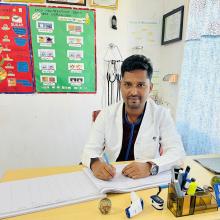
WHO’s mentorship gave us the confidence and clarity we needed. It helped us believe that we could bring change, one household at a time.

The technical facilitation provided by WHO for the Comprehensive Primary Health Care programme roll out in Assam has been enormous and invaluable. The success of Lalmati SC-AAM of Bongaigaon district, Assam is a classic example of “true partnership” among state, district, block, facility staff and a development partner like WHO
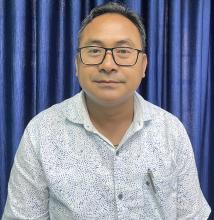
The comprehensive healthcare service delivery by the Comprehensive PHC team members of Lalmati SC-AAM, Bongaigaon, Assam has been able to bring laughter, happiness, and hope among the people residing in the SC-AAM area and WHO has been a true partner in this journey. Collective wisdom, sharing of ideas and working with the community led to this incredible success.
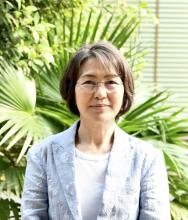
The success of Lalmati Sub Centre-AAM of Assam demonstrates the strong political commitment of Government of Assam towards strengthening primary health care service delivery to realize the goals of UHC – to make primary healthcare service delivery affordable, accessible and with quality for the people residing at the last mile
“You have come, and when I see you, I feel better. I was feeling tired and wanted to get up and you helped me.” These are the words of an older woman with chronic illness, living in the village of Lalmati, Bongaigaon district, Assam. She had just received a visit at her home from a Community Health Officer, based in the village health sub centre.
In this quiet rural stretch, the Lalmati sub centre Ayushman Arogya Mandir (SC - AAM) stands as more than a health facility as it has become a “centre of hope” for the community. For over 10000 people across 10 villages in the catchment area, it symbolizes a new promise: that health care can be close, compassionate, and comprehensive.
For years, the Lalmati sub centre provided basic services with limited community engagement, and preventive care lagged. It was brought to life under India’s national Ayushman Bharat programme, which aims to bring primary health care (PHC) to everyone across India, striving to achieve health for all.
Through a combination of work by a dedicated Comprehensive Primary Health Care (PHC) team on the ground, technical support and guidance from WHO through the UHC Partnership, and an increasingly engaged population, the Lalmati SC - AAM transformed the way it provided services.
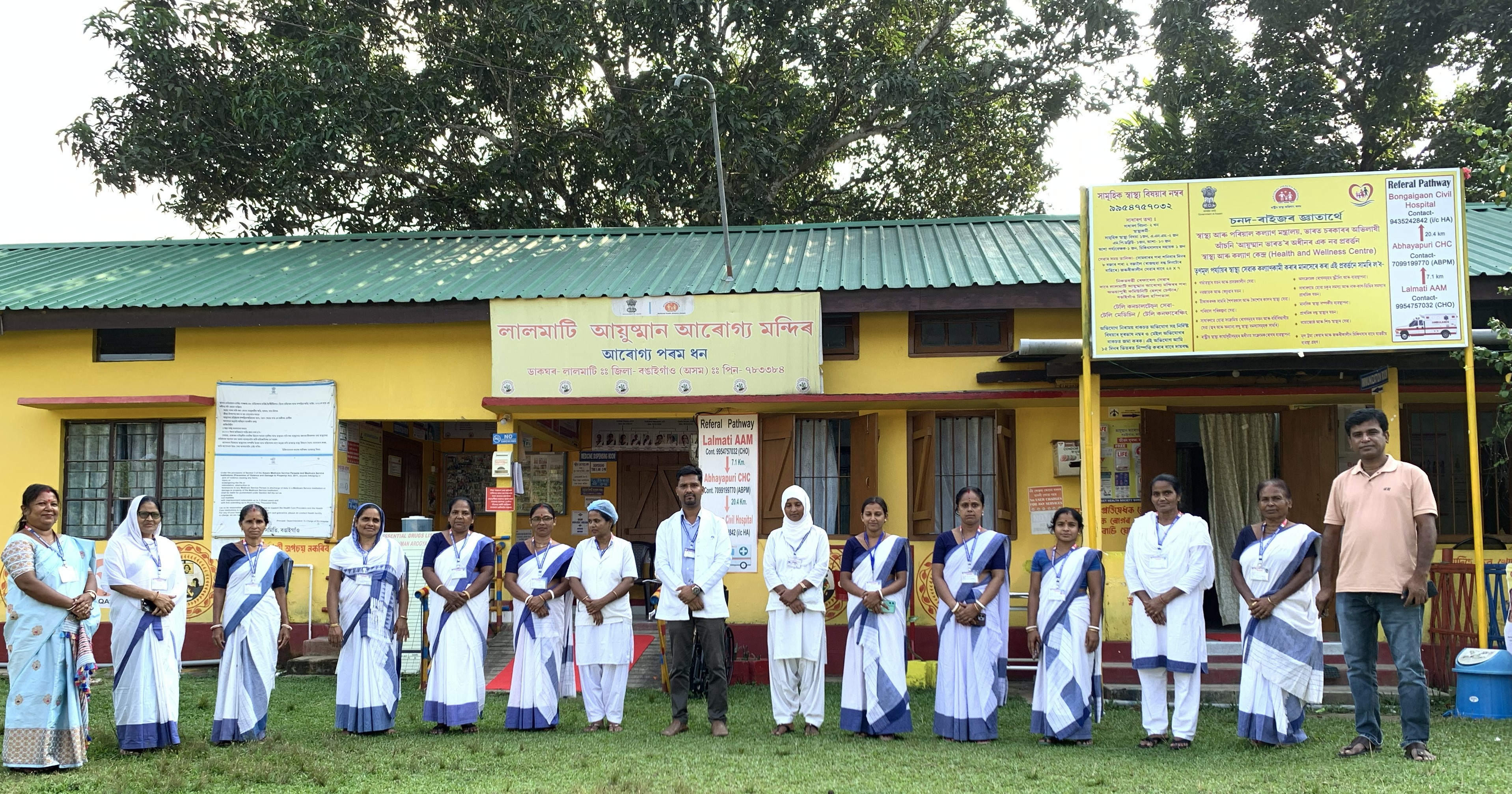
Comprehensive primary health care team at the Lalmati sub centre Ayushman Arogya Mandir
© WHO India
In March 2024, Muktadir Hussain, a young and energetic Community Health Officer, joined the centre. Rather than starting with instructions, he began with listening and meeting with villagers and health workers to understand the local health challenges and way forward.
His message to the team was simple yet powerful: “Let’s take the community along in everything we do.”
This sense of togetherness ignited new energy among the Comprehensive Primary Health Care team comprising multipurpose workers, accredited social health activists, and their supervisor.
The Lalmati SC - AAM is now recognized across Bongaigaon district as a model of community-led health improvement, where service providers and seekers share mutual trust and respect.
Since the rollout of the Comprehensive Primary Health Care services, the population in the catchment area of the Lalmati SC - AMM has witnessed remarkable improvements:
- Zero maternal and child mortality from preventable causes since 2024
- Reduction in high-risk pregnancies from 28 (2023-24) to 12 (2025-26) and early marriages
- Lower cases of communicable diseases and anaemia
- Better control of noncommunicable diseases through regular screening, referral and follow-up
- A community-driven health movement, with growing ownership and participation.
WHO, through the UHC Partnership and the WHO Health Systems Officer in Assam, provided technical mentoring to the Community Health Officer and other team members. The WHO team helped build the capacity of Lalmati staff to improve quality of care, to use data effectively, and importantly to reach out and engage with the community.
“WHO’s mentorship gave us the confidence and clarity we needed. It helped us believe that we could bring change, one household at a time,” said Muktadir Hussain, Community Health Officer of SC-AAM.
The UHC Partnership operates in over 125 countries, representing over 3 billion people. It is supported and funded by Belgium, Canada, the European Union, France, Germany, Ireland, Luxembourg, Japan, the United Kingdom of Great Britain and Northern Ireland, and WHO.
Step by step, the team introduced the Comprehensive Primary Health Care approach under the national Ayushman Bharat programme, offering 12 expanded service packages ranging from maternal and child health, outpatient care for simple ailments, communicable diseases, non-communicable disease, eye, ear, nose and throat, elderly and palliative care, mental health, oral health and emergency services.
India’s Ayushman Bharat programme provides comprehensive PHC services, addressing the basic health needs of the entire population with quality and affordable care, marking a significant step in India’s journey to achieve universal health coverage (UHC). The UHC Partnership participated in the development of the Ayushman Bharat Programme in 2019 at national level.
Translated to the local level, the Programme has been highly effective in reaching populations with improved and effective primary health care services. The Lalmati SC - AAM now provides 14 diagnostic tests, 93 essential drugs, and free care for everyone.
Outpatient visits to the centre have increased from 542 during the month of March 2024 to 864 during October 2025. As a result of improved noncommunicable diseases (NCD) screening for the population over 30 years, the number of patients with diagnosed hypertension and diabetes has increased from 73 during the month of March 2024 to 444 during November 2025.
The SC-AAM team also carries out wellness activities for different groups of the population, under the framework of the ayushman arogya mandir. A total of 14 patient support groups has been formed to support treatment compliance of hypertension and diabetes drugs, and 4 NCD bed-ridden patients are now able to receive NCD drugs at home.
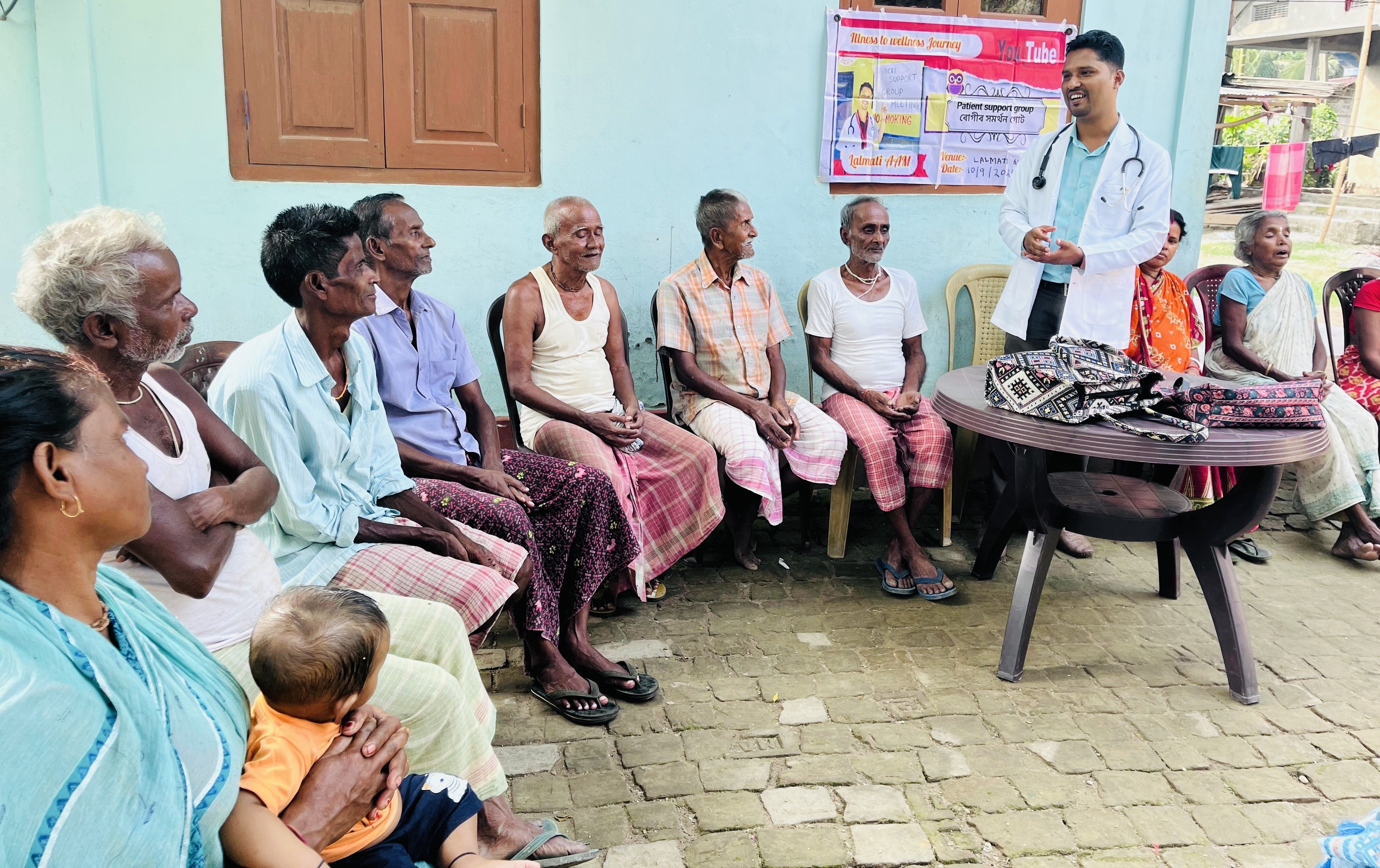
Patient support group meeting with Muktadir Hussain, Community Health Officer
© WHO India
WHO, through the UHC Partnership, has provided strategic technical assistance to the Lalmati SC – AMM to strengthen its PHC approach and implementation. The WHO Health Systems Officer in Assam supported the capacity building of the Lalmati comprehensive PHC team in PHC management, conducted on-the-job mentoring, joined team members during their community visits, and facilitated the readiness of National Quality Assurance Standards (NQAS) assessment prior to the final NQAS assessment.
“The technical facilitation provided by WHO for the Comprehensive Primary Health Care programme roll out in Assam has been enormous and invaluable. The success of Lalmati SC-AAM of Bongaigaon district, Assam is a classic example of “true partnership” among state, district, block, facility staff and a development partner like WHO,” said Dr Lakshmanan S, Indian Administrative Services, Mission Director, National Health Mission (NHM) Assam, India.
The Lalmati SC – AMM has now received recognition for its efforts and improvements. It has earned NQAS certification with a score of 95.38% in August 2024 and received the Kayakalp Award for two consecutive years (2024-25 and 2025-26) which is presented by the Ministry of Health and Family Welfare, Government of India in recognition of health centers that promote cleanliness, hygiene, and infection control and patient-centred healthcare services.
Community members regard the Lalmati SC – AMM as a “centre of hope”, and the way the Lalmati comprehensive PHC team engages with the community supports important approaches to prevention and treatment of people’s health concerns.
The Lalmati SC-AAM team mobilizes community members to visit the sub health centre for screening, and based on outcomes, patients are offered necessary treatments, referrals, and counselling to adopt healthy lifestyle practices. Each patient is linked with a frontline worker to ensure regular follow up.

Screening at the Lalmati sub centre Ayushman Arogya Mandir
© WHO India
The Lalmati SC-AMM covers a huge population of over 10000, and the team also conducts outreach camps in remote areas to take healthcare to the last mile.
The team raises community awareness on healthy lifestyle practices to prevent different communicable and non-communicable diseases (NCDs) and hold meetings with Patients’ Support Groups (PSG) on NCDs. The team conducts home visits for pregnant women, high risk pregnancies, newborns, bed-ridden patients, and older people with limited mobility. Community outreach has resulted in very high acceptability by the community of the use of health services.
“The comprehensive healthcare service delivery by the Comprehensive PHC team members of Lalmati SC-AAM, Bongaigaon, Assam has been able to bring laughter, happiness, and hope among the people residing in the SC-AAM area and WHO has been a true partner in this journey. Collective wisdom, sharing of ideas and working with the community led to this incredible success,” said Karuna Brahma, District Programme Manager, Bongaigaon, NHM, Assam
A Village Health Sanitation & Nutrition Committee – a village level group that designs community-led health care improvement action plan – and Jan Arogya Samiti – a facility level committee with people’s involvement that develops facility improvement plans – meet monthly. This helps the Lalmati team to create action plans to address community demands and brings the community closer.
Following the implementation of activities, the community has displayed tremendous changes in seeking health care and in adopting healthy lifestyle practices. Mutual respect, trust, and collective efforts between service providers and health service users are ensuring a strong uptake in service use.
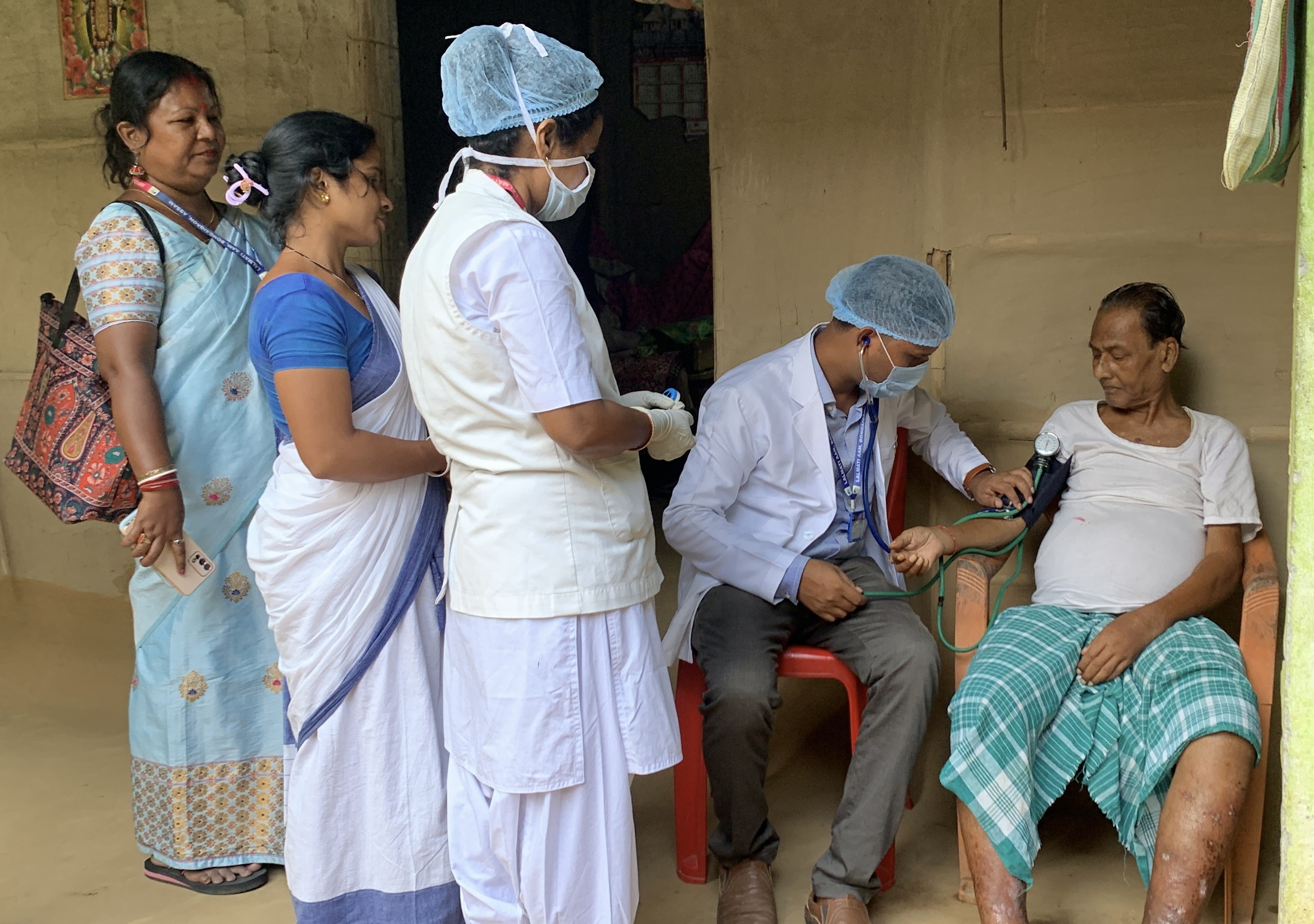
Household visit by the Community Health Officer of the Lalmati sub centre Ayushman Arogya Mandir
© WHO India
From a modest and inadequately used sub centre to a vibrant community centre of hope, Lalmati’s journey exemplifies the true spirit of the Ayushman Bharat - Comprehensive Primary Health Care initiative. It proves that with teamwork, community participation, and compassionate leadership, even the smallest health centre can become a beacon of wellness.
“The success of Lalmati Sub Centre-AAM of Assam demonstrates the strong political commitment of Government of Assam towards strengthening primary health care service delivery to realize the goals of UHC – to make primary healthcare service delivery affordable, accessible and with quality for the people residing at the last mile”, says Ms. Payden, WHO Representative to India a.i