


This decree creates the services of the decentralized territorial authorities and fixes their attributions.
Constitution
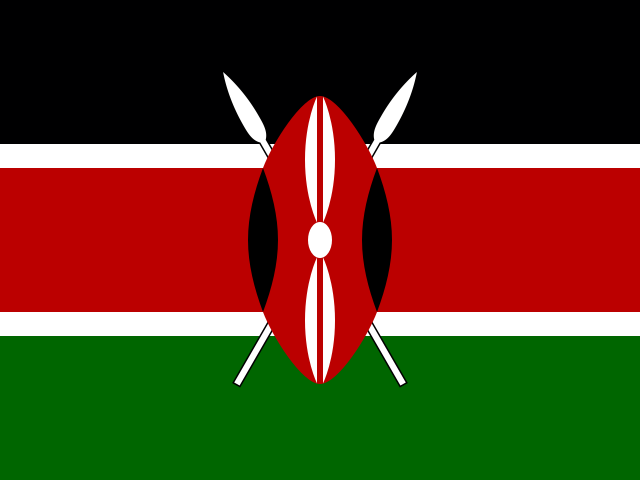
The Constitution of Kenya is a supreme law of the Republic of Kenya. It was adopted in 2010 and replaced the previous Constitution of 1963. The Constitution consists of 264 articles that are arranged into 18 chapters covering such issues as the bill of rights, organization of the state, separation of powers, electoral framework, etc.

Constitution
The Constitution of Madagascar was adopted in 2010. It consists of 168 Articles that are grouped into seven titles. The Constitution addresses a wide range of issues such as the fundamental principles of the State, freedoms, rights and obligations of the citizens, organization of the State, key organs of the state, etc.
The Constitution was promulgated by Decree No 2010-754 of 25 November 2010. It includes 185 articles addressing a wide array of issues including, among other things, human rights and duties and institutional arrangements.
This ordinance establishes a General Code of Local Authorities in the Republic of Niger. The General Code of Local Authorities sets out the fundamental principles of the free administration of local authorities, their powers and their resources. It establishes the legal framework for their management.

Constitution
The Constitution of Niger (2010) is structured into several titles, each addressing different aspects of the state's governance and the rights of its citizens. The document begins with a Preamble, followed by Title I: The State and Sovereignty, which outlines the fundamental principles of the Republic of Niger. Title II: Rights and Duties of the Human Person includes various articles on individual rights, including health rights. Title III: Executive Power details the roles and responsibilities of the President and the Government. Title IV: Legislative Power focuses on the functions of the National Assembly. Title V: Relations Between Executive and Legislative Powers describes the interaction between these branches. Title VI: Judicial Power covers the judiciary's independence and structure. Title VII: Economic, Social, and Cultural Development outlines the state's development policies. Title VIII: The Higher Council of Communication addresses media and communication regulations. Title IX: Local Authorities discusses decentralization and local governance. Title X: Treaties and International Agreements covers the process of treaty ratification. Title XI: Cooperation and Association with States focuses on international cooperation. Title XII: Revision details the process for amending the Constitution. Title XIII: Transitional Provisions and Title XIV: Final Provisions conclude the document. Articles 12 and 13 specifically refer to health rights. Article 12 states that everyone has the right to health, and Article 13 emphasizes the state's duty to create conditions ensuring access to medical services and assistance in case of illness.

Tobacco Control Act
This Act regulates the use, sale, manufacture, advertising and promotion of a tobacco product and provides for connected matters.
This decree defines the scope of the prohibition on smoking in public places or places open to the public, and specifies the powers of health police officers in enforcing the law on tobacco control. It also sets out the rules governing the liability of manufacturers and distributors of tobacco products in the event of damage caused by the consumption of these products.
The Tobacco Control Act
This Act controls the production, manufacture, sale, labelling, advertising, promotion and sponsorship of tobacco products, provides for the Tobacco Control Board, regulates smoking in specified areas and connected purposes.
This law determines the distribution of powers between the State and decentralized local authorities.

Constitution
The Constitution of the Democratic Republic of the Congo was adopted in 2006 and revised by Law No 11/002 of 20 January 2011. The Constitution consists of 229 articles that are grouped into eight titles. The Constitution includes provisions on the key principles of the organization of the Republic, human rights and fundamental freedoms, organization of powers, key state organs, etc.
The purpose of this Act is to: a) protect the health of the population against the many debilitating and fatal diseases caused by tobacco; b) limit the population's access to tobacco and protect it from inducements to use tobacco and the smoking which may result; c) make the population aware of the dangers of tobacco use and exposure to tobacco smoke.

The Constitution was promulgated in 2005 and reviewed in 2018. The Constitution contains 292 articles addressing a broad range of issues as the protection of fundamental rights and freedoms, the fundamental principles of the state and institutional arrangements.

Constitution
The Constitution includes 279 articles addressing a wide array of issues including the Kingdom and its constitution, the protection and promotion of fundamental rights and freedoms, the acquisition and loss of citizenship, the directive principles of state policy, as well as institutional arrangements (the executive, the legislature, the judicature, local governments, and traditional institutions). The Constitution also addresses public services, public finance, and international relations. (non-exhaustive list).
This Regulation establishes the legal framework applicable to the contracting of public works, and the supply of goods and services to the State, including consultancy and concessions.
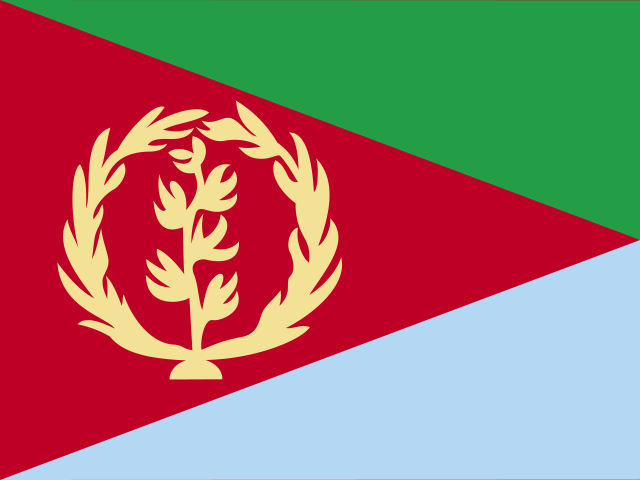
This Proclamation is to protect the present and future generations from the devastating health, social, environmental and economic consequences of tobacco consumption and exposure to tobacco smoke by providing a legal framework for tobacco control measures, and reduce significantly tobacco use and its consequent harm.

Constituição
The Constitution was promulgated in 2004 and modified in 2018. It includes 306 articles (17 titles) addressing a large number of issues as the protection of fundamental rights and freedoms, the fundamental principles of the state and institutional arrangements.
Standards and Quality Act, 2003
The Act establishes the Swaziland Standards Authority and provides for matters connected thereto.

Constitution
The Constitution of Rwanda was promulgated in 2003 and reviewed in 2015. The Constitution contains 177 articles addressing a large number of issues as the protection of fundamental rights and freedoms, fundamental principles of the state and institutional arrangements.

Constituição
The Constitution of Sao Tome and Principe was promulgated by a Law No 1/2003. The Constitution of Sao Tome and Principe is the supreme law of the state that sets out the key values and principles of organization of the state, establishes rights, freedoms and obligations of the people, sets up the key bodies and institutes of the state, provides for the division of the powers within the country, etc. The Constitution of Sao Tome and Principe consists of 160 articles that are grouped into 5 parts.