


Constituição
The Constitution was promulgated in 2004 and modified in 2018. It includes 306 articles (17 titles) addressing a large number of issues as the protection of fundamental rights and freedoms, the fundamental principles of the state and institutional arrangements.

Constitution
The Constitution of Rwanda was promulgated in 2003 and reviewed in 2015. The Constitution contains 177 articles addressing a large number of issues as the protection of fundamental rights and freedoms, fundamental principles of the state and institutional arrangements.

Constituição
The Constitution of Sao Tome and Principe was promulgated by a Law No 1/2003. The Constitution of Sao Tome and Principe is the supreme law of the state that sets out the key values and principles of organization of the state, establishes rights, freedoms and obligations of the people, sets up the key bodies and institutes of the state, provides for the division of the powers within the country, etc. The Constitution of Sao Tome and Principe consists of 160 articles that are grouped into 5 parts.

National Health Act No 61 of 2003
This Act provides a framework for a structured uniform health system within the Republic, taking into account the obligations imposed by the Constitution and other laws on the national, provincial and local governments with regard to health services; and provides for matters connected therewith.

Ethiopian Health Professionals Council Establishment Council of Ministers Regulations No 76/2002
These regulations establish the Health Professionals Council. The council has, among other things, the following attributions: advise the Minister; work in collaboration with the appropriate bodies, ensure that health professional training offered in the country is of high standard; make sure that professional ethics are observed by professionals; follow up and supervise that the names of registered professionals and those who are cancelled from the registry due to various reasons are properly kept by the secretariat.
This diploma establishes the technical description of the different institutions of the National Health Service across the four levels of care, the classification and their specific functions.

Health professions Act
This Act regulates and controls the practice of medicine, dentistry, pharmacy and allied health professions, and provides for matters connected and associated therewith.
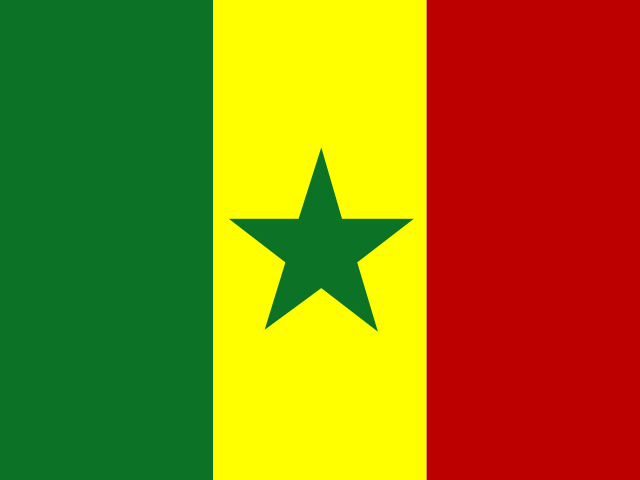
Constitution
The Constitution of Senegal was adopted 2001 and promulgated by law No 2001-03 of 22 January 2001. The Constitution consists of 103 articles that are grouped into 12 titles. The Constitution establishes key principles and values of the state, provides for the separation of powers, establishes the rights and freedoms of the people, sets up the key state organs and their mandates, etc.

Health Professions Act
This Act covers a broad array of issues pertaining to health and care profession and health facilities. It notably establishes a Health Professions Authority of Zimbabwe, a Medical and Dental Practitioners Council of Zimbabwe, an Allied Health Practitioners Council of Zimbabwe, a Natural Therapists Council of Zimbabwe, a Nurses Council of Zimbabwe, a Pharmacists Council of Zimbabwe, a Medical Laboratory and Clinical Scientists Council of Zimbabwe, an Environmental Health Practitioners Council of Zimbabwe and a Medical Rehabilitation Practitioners Council of Zimbabwe. It further provides for the composition and functions of the Authority and those councils, for the registration of persons in health professions and the issue of practising certificates to registered persons; the exercise of disciplinary powers in relation to registered persons and for the registration and control of health institutions and the regulation of services provided.
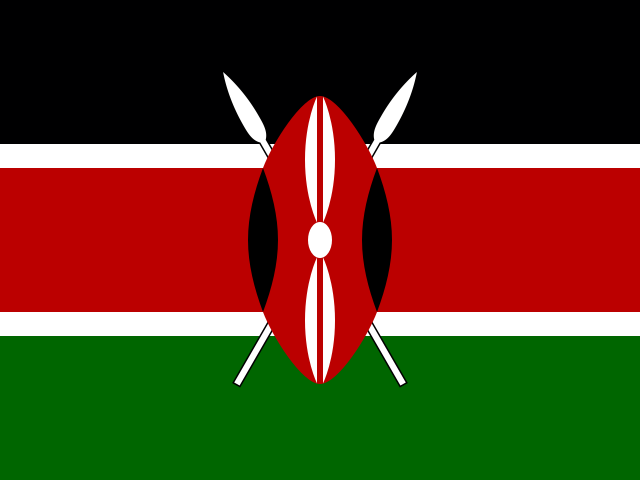
This Act provides for the training, registration and licensing of medical laboratory technicians and technologists, provides for the establishment, powers and functions of the Kenya Medical Laboratory Technicians and Technologists Board, and for connected purposes.

The Constitution of Nigeria was promulgated in 1999 and reviewed in 2023. The Constitution contains 320 articles addressing a large number of issues as the protection of fundamental rights and freedoms, the fundamental principles of the state and institutional arrangements (see more below).
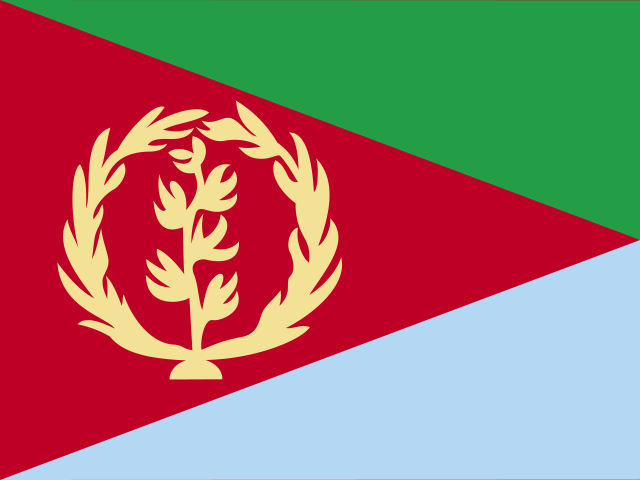
Constitution
The Constitution of Eritrea includes 59 articles addressing, among others, the State's structure, symbols and languages, the National objectives and directive principles, the fundamental rights, freedoms and duties, the institutions in place including the National Assembly, the Executive power, and the judiciary.

Constitution
The Constitution of the Gambia was adopted in 1997. It is the supreme law of the country and consists of 232 articles that are grouped into 23 chapters. The Constitution sets out the values and principles of the state, defines supremacy rules for the law, proclaims fundamental rights and freedoms, establishes key bodies of the state, etc.
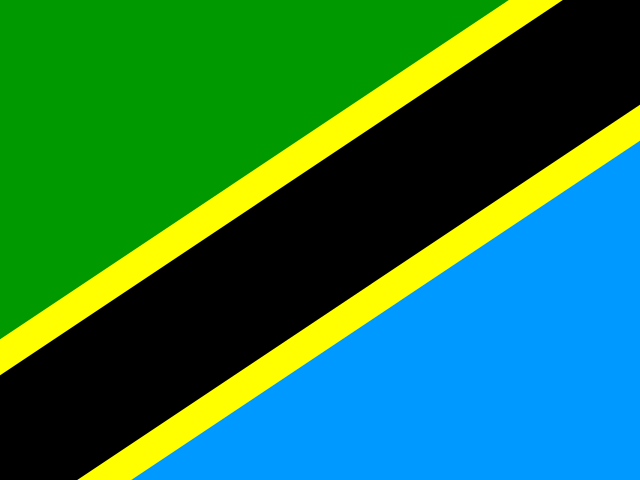
Constitution
The Constitution of the United Republic of Tanzania was adopted in 1977 and amended in 2005. The Constitution is the supreme law of the country and establishes the state principles, regulates the separation of powers, establishes key government structures and their mandates, establishes rights, etc. The Constitution consists of 152 articles that are organized into ten chapters that are supplemented by two schedules.

The Ghana Health Service and Teaching Hospitals Act of 1996 establishes the Ghana Health Service, provides for related matters including its functions and membership; provides for the administration and management of institutions in the Health Service including state-owned hospitals and health stations; continues the existence and operation of Teaching Hospitals and provides for matters related to the foregoing.
Constitution
The Constitution of South Africa was adopted in 1996 and approved by the Constitutional Court. It consists of 241 articles grouped into 14 chapters that are supplemented by 7 schedules. The Constitution is the prime law of the country and sets out the founding provisions of the organization of the state, regulates the civil, political, cultural and economic rights of the people, divides the powers within the state and establishes the key state institutions and organs, etc.
Constitution
The Constitution was promulgated in 1995. It includes 106 articles addressing a large number of issues as the protection of fundamental rights and freedoms, the fundamental principles of the state and institutional arrangements.

Constitution
The Constitution of Uganda was adopted in 1995. The Constitution of Uganda is a supreme law of the state that establishes the key values and principles of the organization of the state, establishes rights, freedoms and obligations, separates the powers within the state and establishes the key state bodies. The Constitution of Uganda consists of 287 articles that are grouped into 19 chapters.

Constitution
The Constitution of the Republic of Malawi was adopted in 1994 and revised in 2017. The Constitution is the supreme law of the Republic that sets out the core values and principles of the organization of the state, separates the powers, defines the rights and obligations of the people, etc. The Constitution of Malawi consists of 215 articles that are organized into 22 Chapters supplemented by a Schedule.

The Constitution was promulgated in 1993 and modified by the Tenth Amendment to the Constitution Act in 2022. It includes 166 articles addressing a large number of issues as the protection of fundamental rights and freedoms, the fundamental principles of the state and institutional arrangements. The document includes the Tenth Amendment to the Constitution Act 2022.