

The Constitutional Petition No. 16 of 2011 challenges the government's failure to provide minimum maternal health services, asserting that this violates constitutional rights to health, life, and dignity. In 2015, the Constitutional Court ruled in favor of the petitioners, emphasizing the need for the government to ensure access to essential maternal health services, such as skilled birth attendants and emergency obstetric care, to protect the right to life and dignity.
Constitution
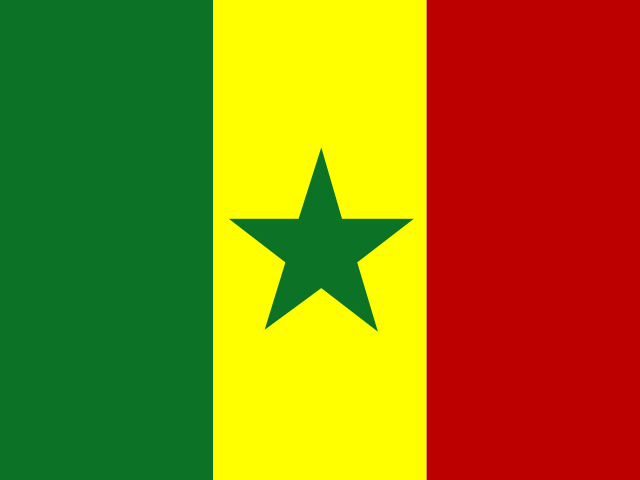
The Constitution of Senegal was adopted 2001 and promulgated by law No 2001-03 of 22 January 2001. The Constitution consists of 103 articles that are grouped into 12 titles. The Constitution establishes key principles and values of the state, provides for the separation of powers, establishes the rights and freedoms of the people, sets up the key state organs and their mandates, etc.

Constitution
The Constitution of Uganda was adopted in 1995. The Constitution of Uganda is a supreme law of the state that establishes the key values and principles of the organization of the state, establishes rights, freedoms and obligations, separates the powers within the state and establishes the key state bodies. The Constitution of Uganda consists of 287 articles that are grouped into 19 chapters.