


Constitution
The Constitution of Madagascar was adopted in 2010. It consists of 168 Articles that are grouped into seven titles. The Constitution addresses a wide range of issues such as the fundamental principles of the State, freedoms, rights and obligations of the citizens, organization of the State, key organs of the state, etc.

This Law defines the rules of public health and hygiene in the Islamic Republic of Mauritania, in particular on public spaces, homes, food and non-food products, water, commercial facilities and industries, educational and health establishments, public buildings, and the natural environment. Its main objective is to preserve and promote public health.
The Constitution was promulgated by Decree No 2010-754 of 25 November 2010. It includes 185 articles addressing a wide array of issues including, among other things, human rights and duties and institutional arrangements.

Constitution
The Constitution of Niger (2010) is structured into several titles, each addressing different aspects of the state's governance and the rights of its citizens. The document begins with a Preamble, followed by Title I: The State and Sovereignty, which outlines the fundamental principles of the Republic of Niger. Title II: Rights and Duties of the Human Person includes various articles on individual rights, including health rights. Title III: Executive Power details the roles and responsibilities of the President and the Government. Title IV: Legislative Power focuses on the functions of the National Assembly. Title V: Relations Between Executive and Legislative Powers describes the interaction between these branches. Title VI: Judicial Power covers the judiciary's independence and structure. Title VII: Economic, Social, and Cultural Development outlines the state's development policies. Title VIII: The Higher Council of Communication addresses media and communication regulations. Title IX: Local Authorities discusses decentralization and local governance. Title X: Treaties and International Agreements covers the process of treaty ratification. Title XI: Cooperation and Association with States focuses on international cooperation. Title XII: Revision details the process for amending the Constitution. Title XIII: Transitional Provisions and Title XIV: Final Provisions conclude the document. Articles 12 and 13 specifically refer to health rights. Article 12 states that everyone has the right to health, and Article 13 emphasizes the state's duty to create conditions ensuring access to medical services and assistance in case of illness.
The code provides rules regarding different rears of public health. It defines the rights and duties pertaining to the protection and promotion of the health of the population.
The Public Health Act
This Act provides for the promotion, preservation and maintenance of public health with a view to ensuring the provisions of comprehensive, functional and sustainable public health services to the general public; and provides for other related measures.

This Act provides for integrated and coordinated disaster management that focuses on prevention, preparedness, response, mitigation, and recovery from, disasters or emergency situations, and the management of their effects, establishes a National Disaster Management Agency and Regional, District and Village Disaster Management Committees.
The decree covers the powers, organization and operation of the Public Hygiene Police.

Constitution
The Constitution of the Democratic Republic of the Congo was adopted in 2006 and revised by Law No 11/002 of 20 January 2011. The Constitution consists of 229 articles that are grouped into eight titles. The Constitution includes provisions on the key principles of the organization of the Republic, human rights and fundamental freedoms, organization of powers, key state organs, etc.
This document sets out the reasons why the Law no. 022-2005/AN on the public hygiene code was adopted. The document make a specific resume for each chapter of the law.
This law governs public hygiene in Burkina Faso, in particular hygiene on public roads and squares, the hygiene of swimming pools and bathing areas, homes, food products, water, industrial and commercial facilities, schools, pre-schools and health establishments, public buildings and the natural environment, and noise control. Its main objective is to preserve and promote public health.

The Constitution was promulgated in 2005 and reviewed in 2018. The Constitution contains 292 articles addressing a broad range of issues as the protection of fundamental rights and freedoms, the fundamental principles of the state and institutional arrangements.

Constitution
The Constitution includes 279 articles addressing a wide array of issues including the Kingdom and its constitution, the protection and promotion of fundamental rights and freedoms, the acquisition and loss of citizenship, the directive principles of state policy, as well as institutional arrangements (the executive, the legislature, the judicature, local governments, and traditional institutions). The Constitution also addresses public services, public finance, and international relations. (non-exhaustive list).

Constituição
The Constitution was promulgated in 2004 and modified in 2018. It includes 306 articles (17 titles) addressing a large number of issues as the protection of fundamental rights and freedoms, the fundamental principles of the state and institutional arrangements.

Constitution
The Constitution of Rwanda was promulgated in 2003 and reviewed in 2015. The Constitution contains 177 articles addressing a large number of issues as the protection of fundamental rights and freedoms, fundamental principles of the state and institutional arrangements.

Constituição
The Constitution of Sao Tome and Principe was promulgated by a Law No 1/2003. The Constitution of Sao Tome and Principe is the supreme law of the state that sets out the key values and principles of organization of the state, establishes rights, freedoms and obligations of the people, sets up the key bodies and institutes of the state, provides for the division of the powers within the country, etc. The Constitution of Sao Tome and Principe consists of 160 articles that are grouped into 5 parts.

National Health Act No 61 of 2003
This Act provides a framework for a structured uniform health system within the Republic, taking into account the obligations imposed by the Constitution and other laws on the national, provincial and local governments with regard to health services; and provides for matters connected therewith.
This law sets the objectives for the orientation, organization and planning of health care in Mali.
Disaster Management Act No 57 of 2002
This Act provides for an integrated and co-ordinated disaster management policy that focuses on preventing or reducing the risk of disasters, mitigating the severity of disasters, emergency preparedness, rapid and effective response to disasters and post-disaster recovery and rehabilitation; regulates the establishment and functioning of national, provincial and municipal disaster management centres; regulates disaster management volunteers and matters incidental thereto.
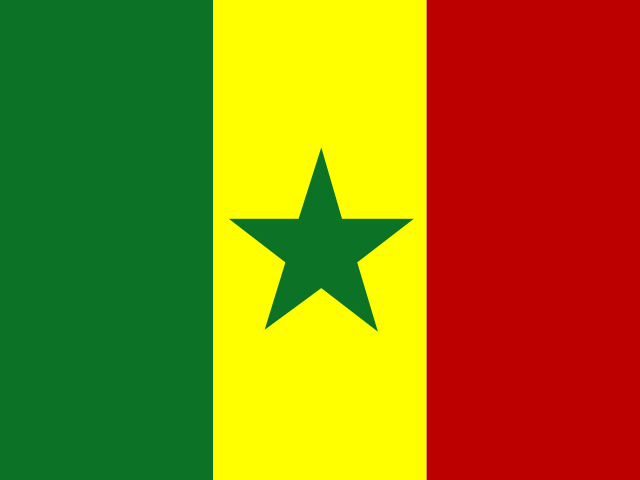
Constitution
The Constitution of Senegal was adopted 2001 and promulgated by law No 2001-03 of 22 January 2001. The Constitution consists of 103 articles that are grouped into 12 titles. The Constitution establishes key principles and values of the state, provides for the separation of powers, establishes the rights and freedoms of the people, sets up the key state organs and their mandates, etc.