


National Budget Highlights
This document provides highlights of the national budget for health for the years 2023-2025.
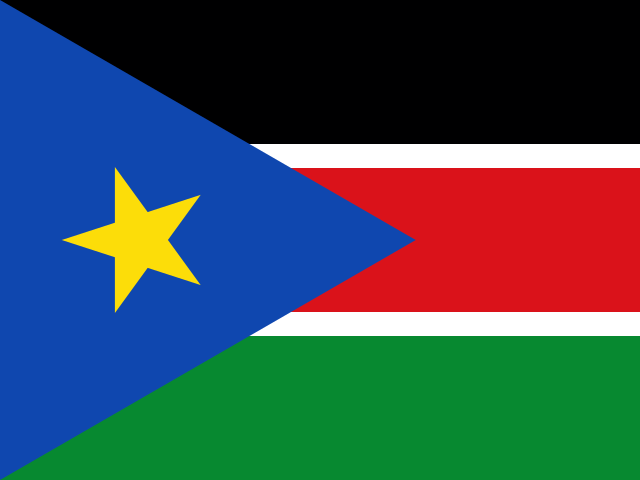
Constitution
The Constitution of South Sudan was adopted in 2011. It is the supreme law of the state. The Constitution sets out the values and principles of organization of the state, establishes the rights, freedoms and obligations of the people, sets up key state institutions and bodies, etc. The Constitution of South Sudan consists of 200 articles that are grouped into fifteen parts, supplemented by 5 schedules.
Constitution
The Constitution of South Africa was adopted in 1996 and approved by the Constitutional Court. It consists of 241 articles grouped into 14 chapters that are supplemented by 7 schedules. The Constitution is the prime law of the country and sets out the founding provisions of the organization of the state, regulates the civil, political, cultural and economic rights of the people, divides the powers within the state and establishes the key state institutions and organs, etc.