


National Budget Highlights
This document provides highlights of the national budget for health for the years 2023-2025.
This Act gives effect to Article 227 of the Constitution; provides procedures for efficient public procurement and for assets disposal by public entities; and for connected purposes.
This Act provides for the making, scrutiny, publication and operation of statutory instruments and for matters connected therewith.
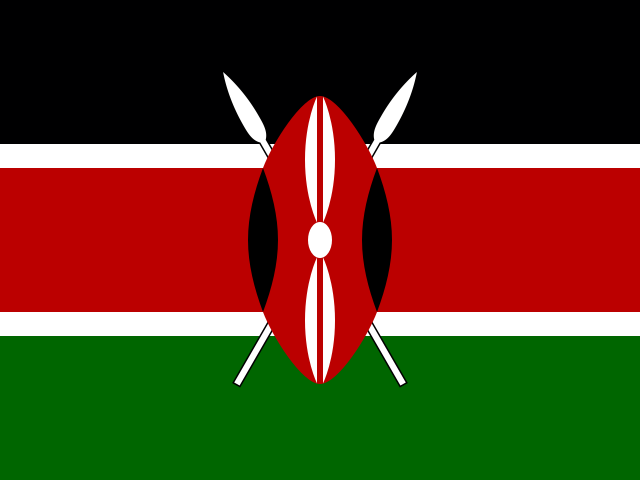
Constitution
The Constitution of Kenya is a supreme law of the Republic of Kenya. It was adopted in 2010 and replaced the previous Constitution of 1963. The Constitution consists of 264 articles that are arranged into 18 chapters covering such issues as the bill of rights, organization of the state, separation of powers, electoral framework, etc.
Constitution
The Constitution of South Africa was adopted in 1996 and approved by the Constitutional Court. It consists of 241 articles grouped into 14 chapters that are supplemented by 7 schedules. The Constitution is the prime law of the country and sets out the founding provisions of the organization of the state, regulates the civil, political, cultural and economic rights of the people, divides the powers within the state and establishes the key state institutions and organs, etc.