


Public health Act
This Act provides for public health, the conditions for improvement of the health and quality of life and the health care for all people in Zimbabwe, the rights, duties, powers and functions of all parties in the public health system, and the measures for administration of public health.
Constitution
This Act repeals and substitutes the Constitution of Zimbabwe. The new Constitution, provided in the schedule of the Act, includes 345 articles addressing a wide array of issues including, among others, founding provisions, national objectives, citizenship, declaration of rights, the executive, the legislature, the judiciary and the courts, principles of public administration, civil service and security services, local authorities, corruption etc. (non-exhaustive list).
Constitution
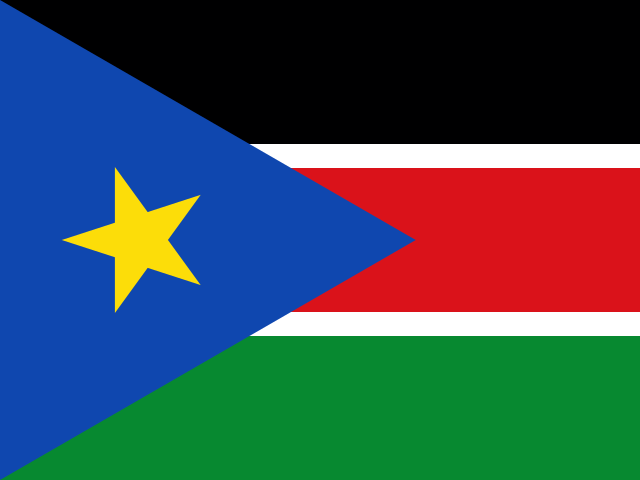
The Constitution of South Sudan was adopted in 2011. It is the supreme law of the state. The Constitution sets out the values and principles of organization of the state, establishes the rights, freedoms and obligations of the people, sets up key state institutions and bodies, etc. The Constitution of South Sudan consists of 200 articles that are grouped into fifteen parts, supplemented by 5 schedules.