


Constituição
The Constitution was promulgated in 2004 and modified in 2018. It includes 306 articles (17 titles) addressing a large number of issues as the protection of fundamental rights and freedoms, the fundamental principles of the state and institutional arrangements.

Standards and Quality Act, 2003
The Act establishes the Swaziland Standards Authority and provides for matters connected thereto.

Constitution
The Constitution of Rwanda was promulgated in 2003 and reviewed in 2015. The Constitution contains 177 articles addressing a large number of issues as the protection of fundamental rights and freedoms, fundamental principles of the state and institutional arrangements.

Constituição
The Constitution of Sao Tome and Principe was promulgated by a Law No 1/2003. The Constitution of Sao Tome and Principe is the supreme law of the state that sets out the key values and principles of organization of the state, establishes rights, freedoms and obligations of the people, sets up the key bodies and institutes of the state, provides for the division of the powers within the country, etc. The Constitution of Sao Tome and Principe consists of 160 articles that are grouped into 5 parts.

The Local Government Act
The Act establishes and regulates a decentralised local government system for the Gambia; it makes provision for the functions, powers and duties of local authorities and for matters connected therewith.
This Law establishes the Health Insurance Scheme for Government Employees in Rwanda. It also determines its functioning and beneficiaries.
Constitution
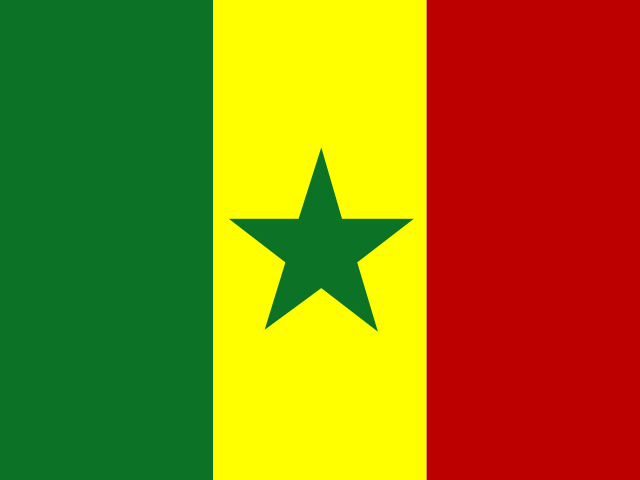
The Constitution of Senegal was adopted 2001 and promulgated by law No 2001-03 of 22 January 2001. The Constitution consists of 103 articles that are grouped into 12 titles. The Constitution establishes key principles and values of the state, provides for the separation of powers, establishes the rights and freedoms of the people, sets up the key state organs and their mandates, etc.

Local Government Act
This Act amends and consolidates the law relating to local government and provides for the matters connected therewith and incidental thereto.

The Constitution of Nigeria was promulgated in 1999 and reviewed in 2023. The Constitution contains 320 articles addressing a large number of issues as the protection of fundamental rights and freedoms, the fundamental principles of the state and institutional arrangements (see more below).

Medical Schemes Act No 131 of 1998
The Act consolidates the laws relating to registered medical schemes; provides for the establishment of the Council for Medical Schemes as a juridical entity; provides for the appointment of the Registrar of Medical Schemes; makes provision for the registration and control of certain activities of medical schemes; protects the interests of members of medical schemes; provides for measures for the co-ordination of medical schemes; and provides for incidental matters.
Constitution
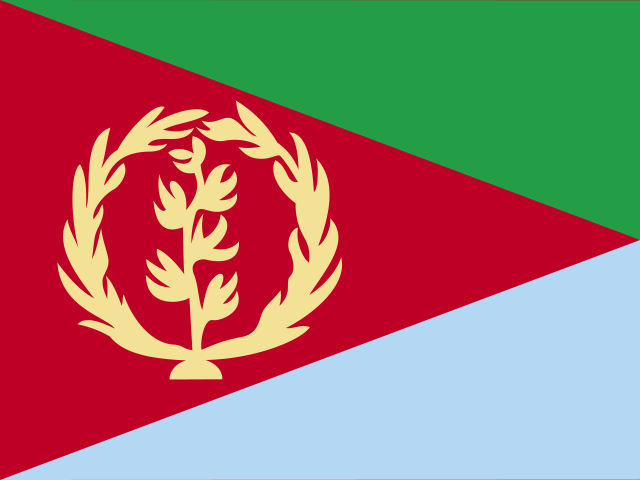
The Constitution of Eritrea includes 59 articles addressing, among others, the State's structure, symbols and languages, the National objectives and directive principles, the fundamental rights, freedoms and duties, the institutions in place including the National Assembly, the Executive power, and the judiciary.
Constitution
The Constitution of the Gambia was adopted in 1997. It is the supreme law of the country and consists of 232 articles that are grouped into 23 chapters. The Constitution sets out the values and principles of the state, defines supremacy rules for the law, proclaims fundamental rights and freedoms, establishes key bodies of the state, etc.
Constitution
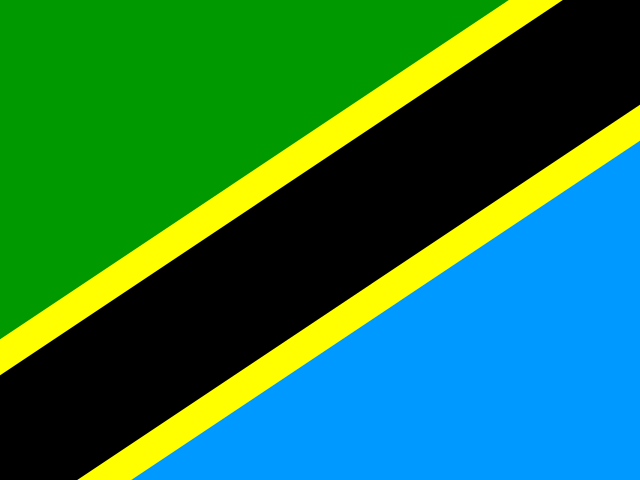
The Constitution of the United Republic of Tanzania was adopted in 1977 and amended in 2005. The Constitution is the supreme law of the country and establishes the state principles, regulates the separation of powers, establishes key government structures and their mandates, establishes rights, etc. The Constitution consists of 152 articles that are organized into ten chapters that are supplemented by two schedules.

The decree N°96-68 addresses the creation, missions, organization and operation of the Inspectorate-General of the Ministry of Health and Population. The text of the decree is provided as part of a compendium of health-related legislation (see pages 22-.24).

Income Tax Act
This Act governs the taxation of individuals, companies and other entities in Mauritius and outlines rules for income tax, tax rates, deductions, exemptions and the administration of tax collection, etc.

The decree creates a technical-administrative division known as a health district for towns, departments, arrondissements and communes. The Health District is the local level for the design, planning, implementation, monitoring and evaluation of health policy.
Constitution
The Constitution of South Africa was adopted in 1996 and approved by the Constitutional Court. It consists of 241 articles grouped into 14 chapters that are supplemented by 7 schedules. The Constitution is the prime law of the country and sets out the founding provisions of the organization of the state, regulates the civil, political, cultural and economic rights of the people, divides the powers within the state and establishes the key state institutions and organs, etc.
The Ordinance n°95-07 governs the insurance sector. The document provided here includes the text of the ordinance and the text of the implementing instruments.

Constitution
The Constitution was promulgated in 1995. It includes 106 articles addressing a large number of issues as the protection of fundamental rights and freedoms, the fundamental principles of the state and institutional arrangements.

Constitution
The Constitution of Uganda was adopted in 1995. The Constitution of Uganda is a supreme law of the state that establishes the key values and principles of the organization of the state, establishes rights, freedoms and obligations, separates the powers within the state and establishes the key state bodies. The Constitution of Uganda consists of 287 articles that are grouped into 19 chapters.