


Constitution
The Constitution of Rwanda was promulgated in 2003 and reviewed in 2015. The Constitution contains 177 articles addressing a large number of issues as the protection of fundamental rights and freedoms, fundamental principles of the state and institutional arrangements.

Constituição
The Constitution of Sao Tome and Principe was promulgated by a Law No 1/2003. The Constitution of Sao Tome and Principe is the supreme law of the state that sets out the key values and principles of organization of the state, establishes rights, freedoms and obligations of the people, sets up the key bodies and institutes of the state, provides for the division of the powers within the country, etc. The Constitution of Sao Tome and Principe consists of 160 articles that are grouped into 5 parts.
Constitution
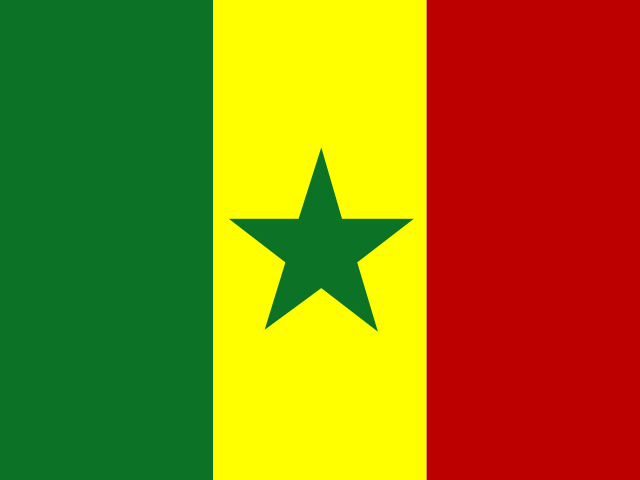
The Constitution of Senegal was adopted 2001 and promulgated by law No 2001-03 of 22 January 2001. The Constitution consists of 103 articles that are grouped into 12 titles. The Constitution establishes key principles and values of the state, provides for the separation of powers, establishes the rights and freedoms of the people, sets up the key state organs and their mandates, etc.

The document approved the Medical Deontology and Ethic Code of Angola. It is a legal instrument that establishes principles and rules to be observed by all doctors in the exercise of their profession. The provisions of the Code apply to all doctors registered with the Angolan Medical Association.

The Medical Council Act 1999
This Act establishes the Medical Council of Mauritius which is responsible for the regulation and oversight of the medical profession in Mauritius, including the registration, licensing, and professional conduct of medical practitioners.
Dental Council Act
This Act regulates the practice of the profession of dental surgeon and dental specialist, and establishes the Dental Council of Mauritius.

The Constitution of Nigeria was promulgated in 1999 and reviewed in 2023. The Constitution contains 320 articles addressing a large number of issues as the protection of fundamental rights and freedoms, the fundamental principles of the state and institutional arrangements (see more below).
This Law regulates the establishment and practice of the art of health, namely the medical art, dentistry, the pharmaceutical art, nursing and paramedical art.
This Act consolidates the law relating to the medical and dental practice and provides for other connected purposes.

This law provides for the National Order of doctors and specifies its mandate and operating modes.
Constitution
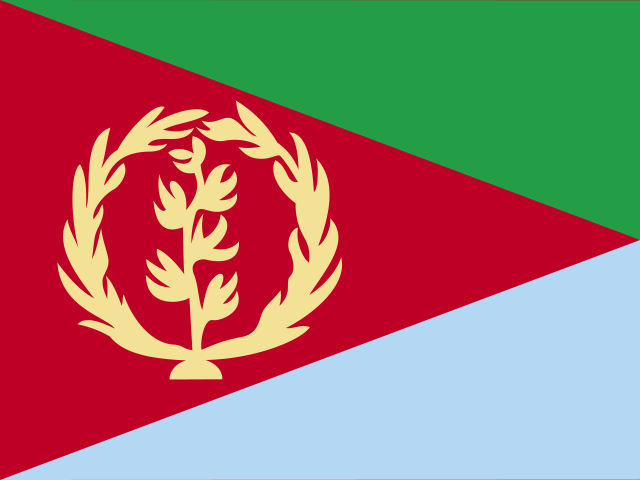
The Constitution of Eritrea includes 59 articles addressing, among others, the State's structure, symbols and languages, the National objectives and directive principles, the fundamental rights, freedoms and duties, the institutions in place including the National Assembly, the Executive power, and the judiciary.

Constitution
The Constitution of the Gambia was adopted in 1997. It is the supreme law of the country and consists of 232 articles that are grouped into 23 chapters. The Constitution sets out the values and principles of the state, defines supremacy rules for the law, proclaims fundamental rights and freedoms, establishes key bodies of the state, etc.
Constitution
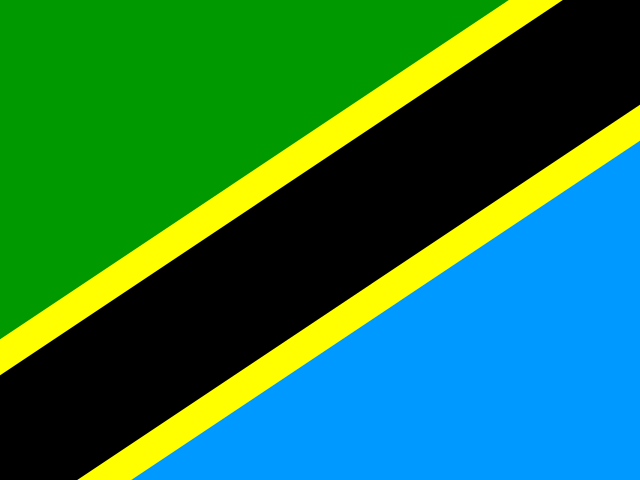
The Constitution of the United Republic of Tanzania was adopted in 1977 and amended in 2005. The Constitution is the supreme law of the country and establishes the state principles, regulates the separation of powers, establishes key government structures and their mandates, establishes rights, etc. The Constitution consists of 152 articles that are organized into ten chapters that are supplemented by two schedules.

The Decree establishes the Code of Medical Ethics. The Code is applicable to any Doctors registered with the Medical Register, any performing a professional act, as well as to students performing a replacement or assisting a physician in the case provided for in article 84 of Code.

Constitution
The Constitution of South Africa was adopted in 1996 and approved by the Constitutional Court. It consists of 241 articles grouped into 14 chapters that are supplemented by 7 schedules. The Constitution is the prime law of the country and sets out the founding provisions of the organization of the state, regulates the civil, political, cultural and economic rights of the people, divides the powers within the state and establishes the key state institutions and organs, etc.

Constitution
The Constitution was promulgated in 1995. It includes 106 articles addressing a large number of issues as the protection of fundamental rights and freedoms, the fundamental principles of the state and institutional arrangements.

Constitution
The Constitution of Uganda was adopted in 1995. The Constitution of Uganda is a supreme law of the state that establishes the key values and principles of the organization of the state, establishes rights, freedoms and obligations, separates the powers within the state and establishes the key state bodies. The Constitution of Uganda consists of 287 articles that are grouped into 19 chapters.

Constitution
The Constitution of the Republic of Malawi was adopted in 1994 and revised in 2017. The Constitution is the supreme law of the Republic that sets out the core values and principles of the organization of the state, separates the powers, defines the rights and obligations of the people, etc. The Constitution of Malawi consists of 215 articles that are organized into 22 Chapters supplemented by a Schedule.

The Medical Practitioners and Dental Surgeons Decree
This Decree establishes the Medical and Dental Council, provides for the registration of medical practitioners and dental surgeons and for other related matters.

The Constitution was promulgated in 1993 and modified by the Tenth Amendment to the Constitution Act in 2022. It includes 166 articles addressing a large number of issues as the protection of fundamental rights and freedoms, the fundamental principles of the state and institutional arrangements. The document includes the Tenth Amendment to the Constitution Act 2022.