

Image
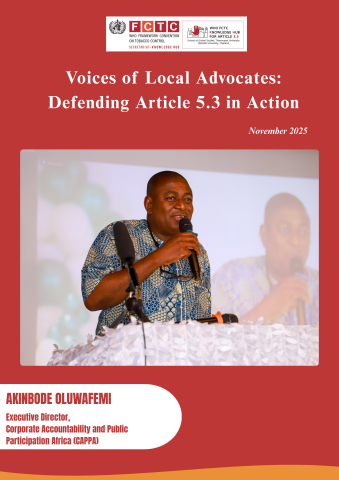
Executive Director,
Corporate Accountability and Public Participation Africa (CAPPA)
Akinbode Oluwafemi, a veteran Nigerian tobacco control advocate, recounts decades of facing intimidation, bribery attempts, and threats from the tobacco industry, particularly British American Tobacco (BAT) and Philip Morris International. His earliest encounter occurred at the 2000 WHO FCTC Public Hearing in Geneva, where BAT officials tried to recruit him with offers of sponsorship. Subsequent incidents included harassment, threats of lawsuits, and even a death threat following a live television interview. Despite a violent attack on his home in 2010, he remained steadfast, rejecting relocation offers and continuing his advocacy.
Oluwafemi attributes his resilience to prior experiences in pro-democracy and environmental campaigns against oil giants like Shell and Chevron. He believes the tobacco industry’s exploitation mirrors that of extractive industries and sees his mission as protecting public health and sovereignty.
He identifies new forms of tobacco industry interference as the greatest threat today, especially deceptive “harm reduction” narratives, co-opted public discourse through media, and social media manipulation. These tactics aim to undermine the gains of the WHO Framework Convention on Tobacco Control (FCTC). Nigeria’s response has been to institutionalize industry monitoring, collaborate closely with government agencies, and engage the media to expose industry deceit.
Oluwafemi warns that digital marketing and influencer culture, notably through Afrobeat music and movies, are recruiting young smokers. He urges advocates to publicly challenge celebrities who promote tobacco use and to empower youth to lead digital resistance campaigns that redefine social norms around smoking.
For advocates’ protection, he calls for long-term institutional support, sustained funding, global solidarity mechanisms, and capacity building to counter industry evolution. He envisions a continental “Africa Week of Resistance” and a unified regional platform for documenting and countering interference. Despite progress, enforcement of FCTC Article 5.3 remains weak; most African countries lack enforceable legal instruments or deterrent penalties for violations. Nigeria’s model, anchored in cross-sector collaboration, independence, resilience, and evidence-based advocacy, offers lessons but also highlights the years of persistence required for reform.
Looking ahead, Oluwafemi envisions a decade where African nations fully domesticate Article 5.3, enforce sanctions for violations, and hold tobacco companies legally accountable for public health damages, cementing a future free from tobacco industry influence.
To read the full interview, click here.

