

Image
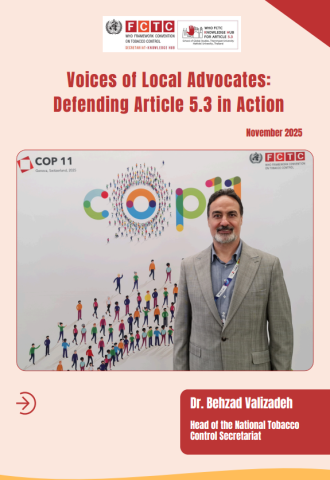
Dr. Behzad Valizadeh highlights that the tobacco industry in Iran strategically exploits the country’s economic sanctions to portray itself as a vital contributor to employment and economic productivity. By overstating the impacts of tobacco control measures such as tax increases, flavor bans, and packaging restrictions, the industry argues these policies fuel illicit trade and harm the economy. This narrative has been used as a central tactic to weaken and delay effective tobacco control efforts.
Despite this interference, Iran has successfully resisted industry attempts in several cases. A notable example is the rejection of industry objections to the requirement of employing health experts within tobacco manufacturing facilities. Regulatory bodies and judicial authorities have upheld such public-health-centered regulations by rejecting industry complaints supported by justifications prepared by the National Tobacco Control Headquarters and health sector authorities. This demonstrates that legal and institutional resistance, when informed and supported by evidence, can counter industry lobbying.
Dr. Valizadeh emphasizes that the Article 5.3 of the WHO Framework Convention on Tobacco Control (WHO FCTC) remains insufficiently institutionalized in Iran’s legal framework. The current Comprehensive Tobacco Control Law predates the official executive guidelines of Article 5.3, resulting in the absence of explicit legal provisions prohibiting industry interference. While related laws, such as rules preventing government employees from simultaneously working in private-sector tobacco-related roles, provide partial safeguards, enforcement remains fragmented. Iran is currently drafting amendments to incorporate specific 5.3 protections and create an executive bylaw solely dedicated to preventing industry interference.
Inter-sectoral coordination is identified as essential. The ministerial-level Tobacco Control Coordination Structure engages multiple ministries and is expected to formally issue resolutions on industry interference, pending presidential approval. Strengthening this structure is a strategic step to elevate Article 5.3 enforcement to the highest level of national policymaking.
International cooperation is presented as a major enabling factor. Iran played a leading role at COP8 in advancing protections against industry interference and later in COP9 and COP10 through contributions such as supporting resolutions on liability. These engagements illustrate how global mechanisms can guide and reinforce domestic policy implementation.
Looking ahead, Dr. Valizadeh stresses the importance of intensified surveillance of industry tactics, particularly Corporate Social Responsibility (CSR) initiatives and related reputation-enhancement strategies. He calls for greater support from NGOs, WHO regional offices, and the international community, especially for low- and middle-income countries facing intensified industry pressure. With stronger monitoring, legislative reform, and adherence to Article 5.3 globally, he envisions accelerated implementation of tobacco control measures and progress toward a tobacco-free future.
To read the full interview, click here.
.

