|
Welcome to your quarterly Age-friendly World newsletter! |
| |
|
Read on, and you will see that story already being written: older residents reconnecting through everyday mobility in Seongnam, equity and human rights taking centre stage in our first Age-friendly Conversation, and countries investing in healthy ageing as a foundation for the future at the World Health Assembly.
The Congress is where we bring it together, and the conversation carries on well beyond it. In the coming weeks we return to these threads, with Age-friendly Conversations on social connection (25 June - register here) and on sustainability and resilience (7 July - info below), while the pre-launch of our Mega-map on Interventions and Programmes for Age-friendly Environments gathers the evidence into one place so the action we take now can be informed by it.
Whether you join us in Donostia/San Sebastián or follow from a distance, this edition is your way to stay connected to what comes next. As ever, it comes back to one idea: where we live shapes how we age.
Global Network for Age-friendly Cities and Communities – Secretariat
World Health Organization |
| |
|
Member in Focus: Changunarayan Municipality, Nepal |
| |
|
Start with equity. This edition’s Member in Focus is Changunarayan Municipality – our first Global Network member in Nepal, where inclusion begins with giving older residents a seat at the table.
Changunarayan Municipality is strengthening participation, health and inclusion for older residents through coordinated, cross-sector action. Guided by national policy, it has established senior citizen clubs in all nine wards to support representation in decision-making, while expanding access to free health services for those over 70. Through partnerships such as the SAHARA programme, the municipality delivers community-based activities – from health camps to digital literacy – promoting active, healthy and respectful ageing.
By combining strong national policy alignment with practical, community-level initiatives and partnerships, Changunarayan Municipality offers a replicable model for embedding older people’s participation, health and dignity into local governance across Nepal and the wider region. |
| |
|
Age-friendly Practice in Focus: Senior Public Transport Support policy (Seongnam City - Republic of Korea) |
| |
|
Now to connection, which can be as practical as a bus fare to provide the accessible transportation necessary for people to meet. For this newsletter issue, we are putting the spotlight on the Senior Public Transport Support policy, an age-friendly practice run by the Seongnam City (Republic of Korea).
Seongnam City offers a specialised transportation subsidy for residents aged 70 and older, helping older people move around the city with greater ease and independence. Eligible residents can receive up to 230,000 KRW per year to cover fares on city buses and village (Maeul) buses within Seongnam, including select inter-city routes connecting nearby Gyeonggi-do areas. Using a convenient post-reimbursement system, seniors pay with their designated G-pass (Senior Welfare Card), and the city reimburses the used amount directly to their bank account. By expanding mobility support beyond the national free subway programme to include bus travel, this initiative reduces financial burden, combats social isolation, and supports healthy ageing – closely aligning with the WHO Age-friendly Cities principles of transportation and social participation. |
| |
|
Kanagawa Prefecture supporting international knowledge exchange on age-friendly environments with the WHO Regional Office for the Western Pacific and WHO Collaborating Centre – Kanagawa Prefecture |
| |
|
In January 2026, the Kanagawa Prefectural Government, a sub-national Affiliate, held a two-day online programme co-hosted by WHO Western Pacific Regional Office and the newly designated WHO Collaborating Centre in Kanagawa.
The programme aims to strengthen multisectoral collaboration and build local capacity for age-friendly policy designing. The webinar showcased age-friendly community development initiatives in Kanagawa and Malaysia. The workshop introduced basic concepts of policy entrepreneurship through structured group exercise. More than 120 people from 17 countries participated. |
| |
|
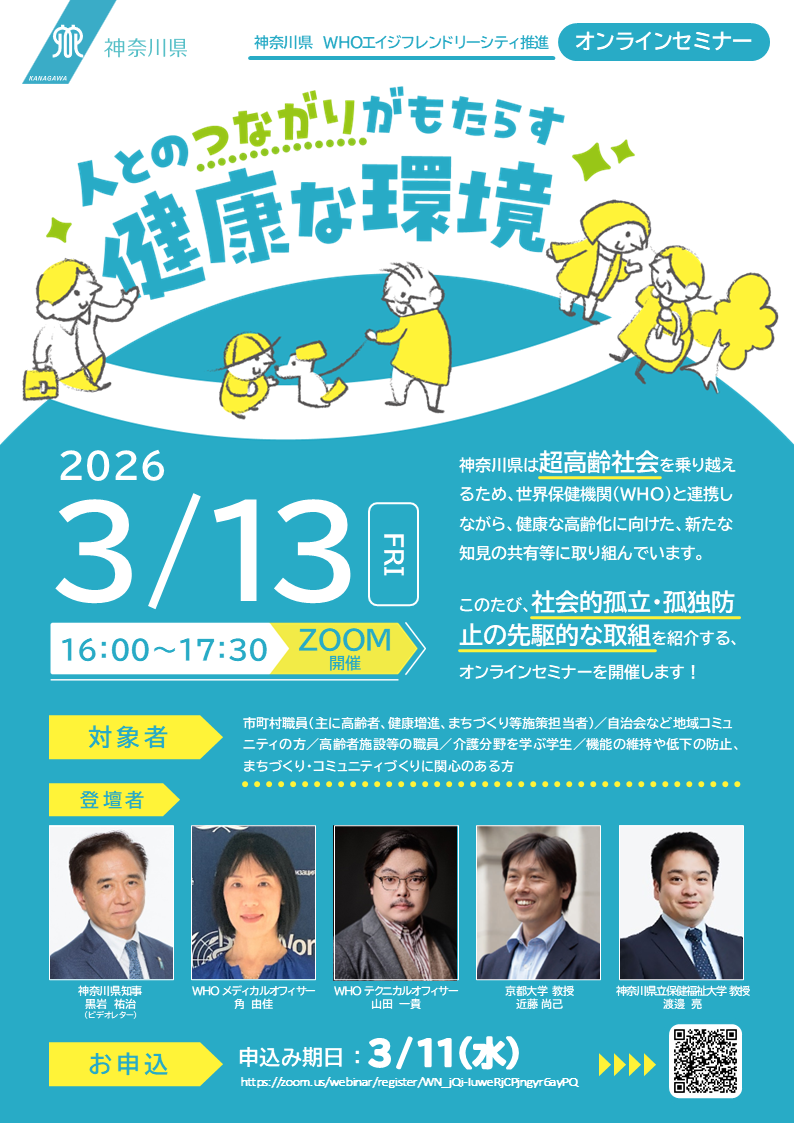
The Kanagawa Prefectural Government hosted a webinar in March 2026, inviting five experts including professionals from WHO.
Topics included: Governor Kuroiwa's message to promote age-friendly environments in Kanagawa; ICOPE (Integrated Care for Older People) approach to create healthy ageing environments; WHO’s initiatives on social isolation and loneliness; importance of social prescribing in promoting healthy ageing; WHOCC’s public-academia collaboration to promote age-friendly environments; and Non-Profit Organization’s initiatives to prevent isolation and loneliness among retirees. |
| |
|
Nuevo León municipalities complete the Vancouver Protocol through accelerated, participatory processes |
| |
|
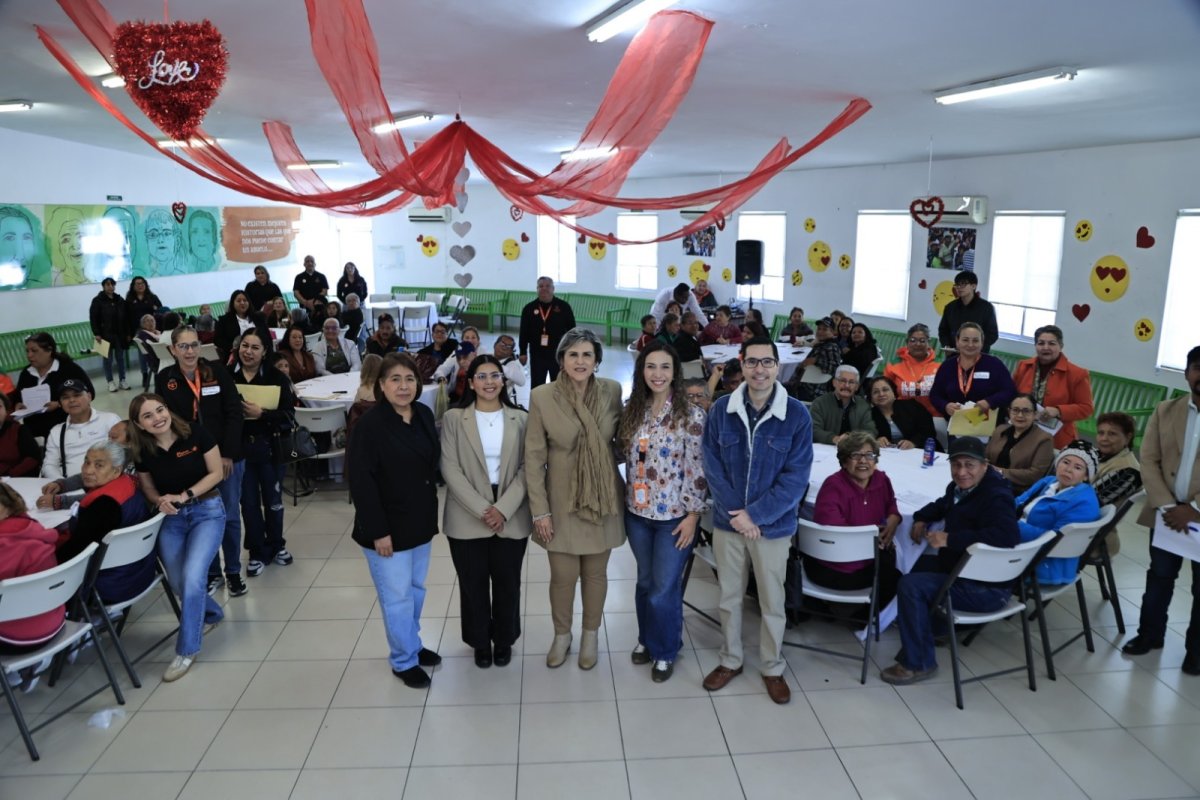
Municipalities in Nuevo León – Guadalupe and Santiago – demonstrated strong institutional leadership by completing their participatory diagnoses under the Vancouver Protocol within notably short timeframes. Led by local governments, with coordination from municipal units for older persons and technical support from IEPAM, a Global Network subnational affiliate, the processes engaged more than 400 older persons, caregivers, and key stakeholders. These efforts expanded participatory scope, strengthened local capacity, and generated critical inputs to advance inclusive, age-friendly environments aligned with established guidelines. |
| |
|
Centre for Ageing Better (UK): Age-friendly Built Environment Quick Guides |
| |
|
The Centre for Ageing Better (UK) have created a collection of quick guides, which offers a simple yet comprehensive overview of the key design considerations for ensuring age-friendliness across a range of spaces and amenities. The guides cover bus stops, parks and green spaces, public and community buildings, seating and rest areas, streets and pavements, toilets and wayfinding and signage. |
| |
|
Jagiellonian University - AFCC Poland releases practical guide on age-friendly cities and communities in Poland |
| |
|
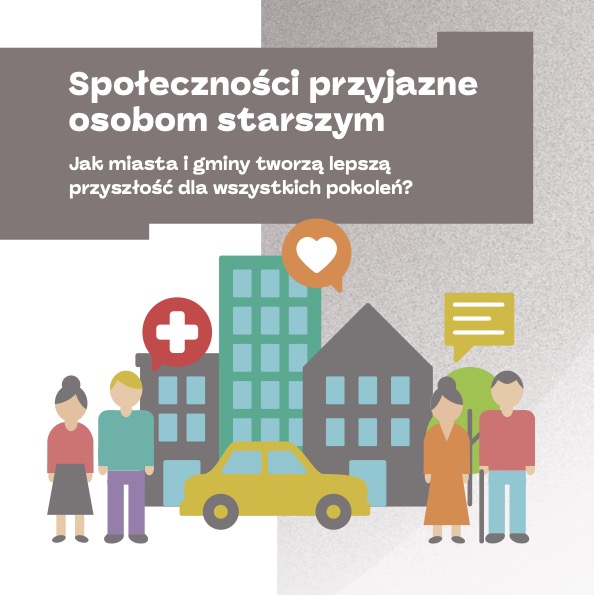
How can cities and municipalities become better places to age – and better places to live for everyone? This new AFCC Poland guide presents practical solutions from Polish communities, developed through cooperation with local representatives and grounded in the voices of older residents. From housing and transport to social participation, care, digital inclusion and support for older refugees, the publication shows how age-friendly policies can strengthen communities across all generations. |
| |
|
International Federation on Ageing (IFA): Registration is Open for the 4th English Edition of the AFE ECHO Programme! |
| |
|
The International Federation on Ageing (IFA) in collaboration with the World Health Organization, is proud to announce the Age-friendly Environments ECHO returns for its fourth edition this Fall! This ground-breaking initiative fosters collaboration and knowledge sharing for all interested in advancing age-friendly programming.
Emerging age-friendly leaders and community leaders interested in making their communities more age-friendly are encouraged to register today for this 5-session learning cycle. |
| |
|
Updates from the Network Secretariat |
| |
|
WHO’s daily dose on age-friendly cities and communities |
| |
|
Think about your neighbourhood. Can you walk to a grocery or pharmacy safely? Is there a bench to rest on? Do people look out for each other? Can you continue to work and contribute to your community?
Where we live shapes how we age. And every community has the power to do better. And you should have the power to decide on the present and future of the communities you live in.
For those who missed it, watch WHO’s daily dose on age friendly cities and communities here. |
| |
|
Pre-launch of the Mega-map on Interventions and Programmes for Age-friendly Environments |
| |
|
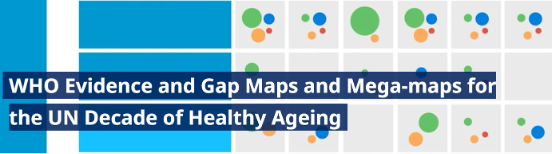
And to make age-friendly action last, we are strengthening the evidence behind it. WHO is pre-launching the Mega-map on Interventions and Programmes for Age-friendly Environments at the 3rd World Congress in Donostia/San Sebastián. The pre-launch session takes place today, 15 June, where Congress participants explore the mega-map and discuss its key findings and use for age-friendly communities. This new tool brings research on age-friendly environments together in one place through a visual map, helping cities and communities see what evidence exists, where knowledge is strong, and where gaps remain. The mega-map will be published online soon, so watch this space for updates. |
| |
|
Age-friendly Environments at the 79th World Health Assembly |
| |
|
At WHA79, the GNAFCC had a strong presence across multiple events, including the official side event led by France on “Investing in Healthy Ageing – a foundation for population health and well-being". The session brought together several countries that are already investing on age-friendly environments and have national programs affiliated to the Global Network, including France, Ireland, Singapore and Brazil, as well as two of our international affiliates, HelpAge International and the International Federation on Ageing.
Beyond this event, GNAFCC voices contributed across discussions on systems transformation and community action. We look forward to an even stronger, more visible Network presence at WHA80. |
| |
|
Highlights from the First Session of the Age friendly Conversations Online Series: Equity, Human Rights and Age friendly Environments |
| |
|
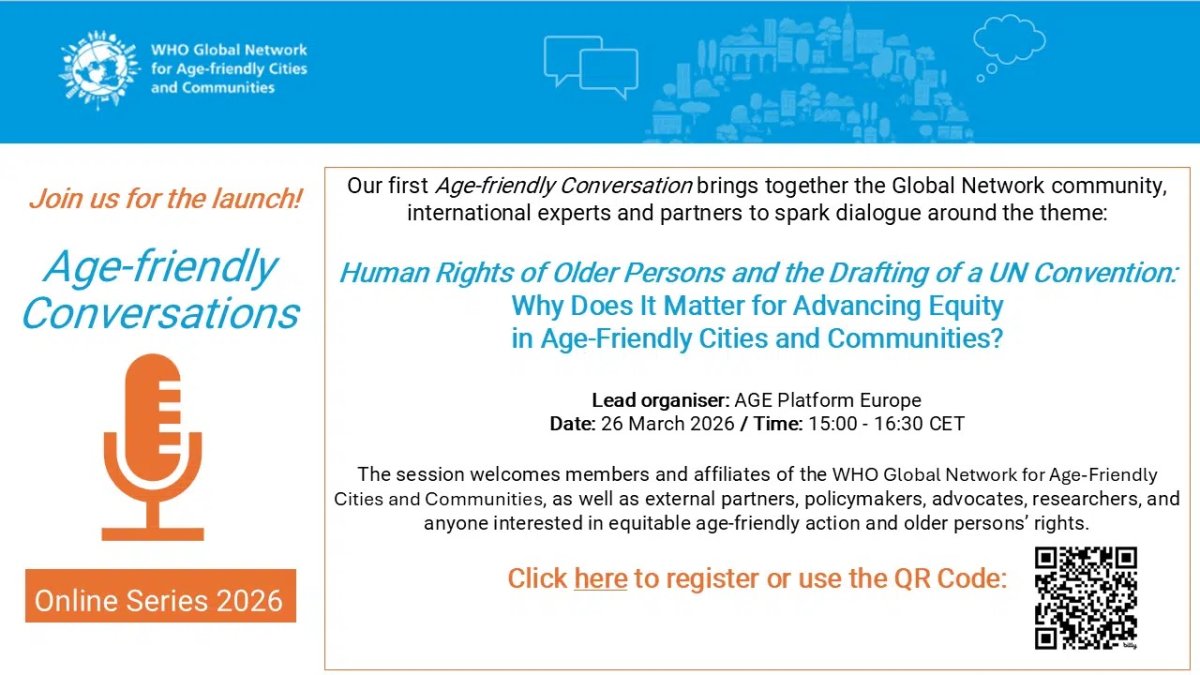
Thank you to the 190+ participants who joined online for our first Age-friendly Conversation on equity, human rights, and the emerging UN convention on the rights of older persons. The session was organised by AGE Platform Europe and highlighted the pivotal role of local actors as human rights actors, the transformative potential of a future convention, and the strong momentum across the age friendly community to engage in this historic process.
Catch up on the discussions with the recording, available here. |
| |
|
Upcoming Age-friendly Conversations: social connection (25 June), and sustainability (tentatively 7 July) |
| |
|
Communities are where social connection is built, or eroded. Our next Age-friendly Conversation explores the role cities and communities play in strengthening it across the life course, and how connection in turn is central to the health of the people who live there, whatever their age. The session will feature Minister Hitoshi Kikawada, Minister of State for Measures for Loneliness and Isolation, Japan, and Commissioner, WHO Commission on Social Connection.
Date: 25 June 2026 (Thu)
Time: 12:00–13:30 CEST
Format: Online (Zoom); interpretation in all UN languages |
| |
|
Save the date: Sustainability in Age-friendly Cities and Communities: enhancing resilience and reducing vulnerability. Picking up the Congress theme of sustainability, the following Conversation in the series asks how age-friendly communities can build resilience and reduce vulnerability over time, from inequality to climate-related risk.
Date: 7 July 2026 (tentative)
Time: 15:00–16:30 CEST
Format: Online
Details: registration to follow, keep an eye on your inbox. |
| |
|
Age-friendly World is a World Health Organization website dedicated to promoting age-friendliness around the world. The World Health Organization Global Network for Age-friendly Cities and Communities (GNAFCC) is a global coalition of cities and communities committed to becoming more age-friendly.
Submit your news on Age-friendly World or get in touch with us at gnafcc@who.int. |
| |
|